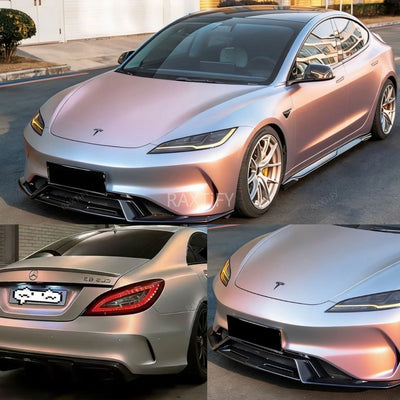

Carbon fiber hood wrap is made of carbon-patterned automotive vinyl that is applied over the original hood. The direction of the pattern, reflections and stretching may be more obvious on the hood than other surfaces like mirror caps and interior trim, which are smaller. This will be dependent on the carbon pattern used, the finish of the film, and the shape of the hood used.
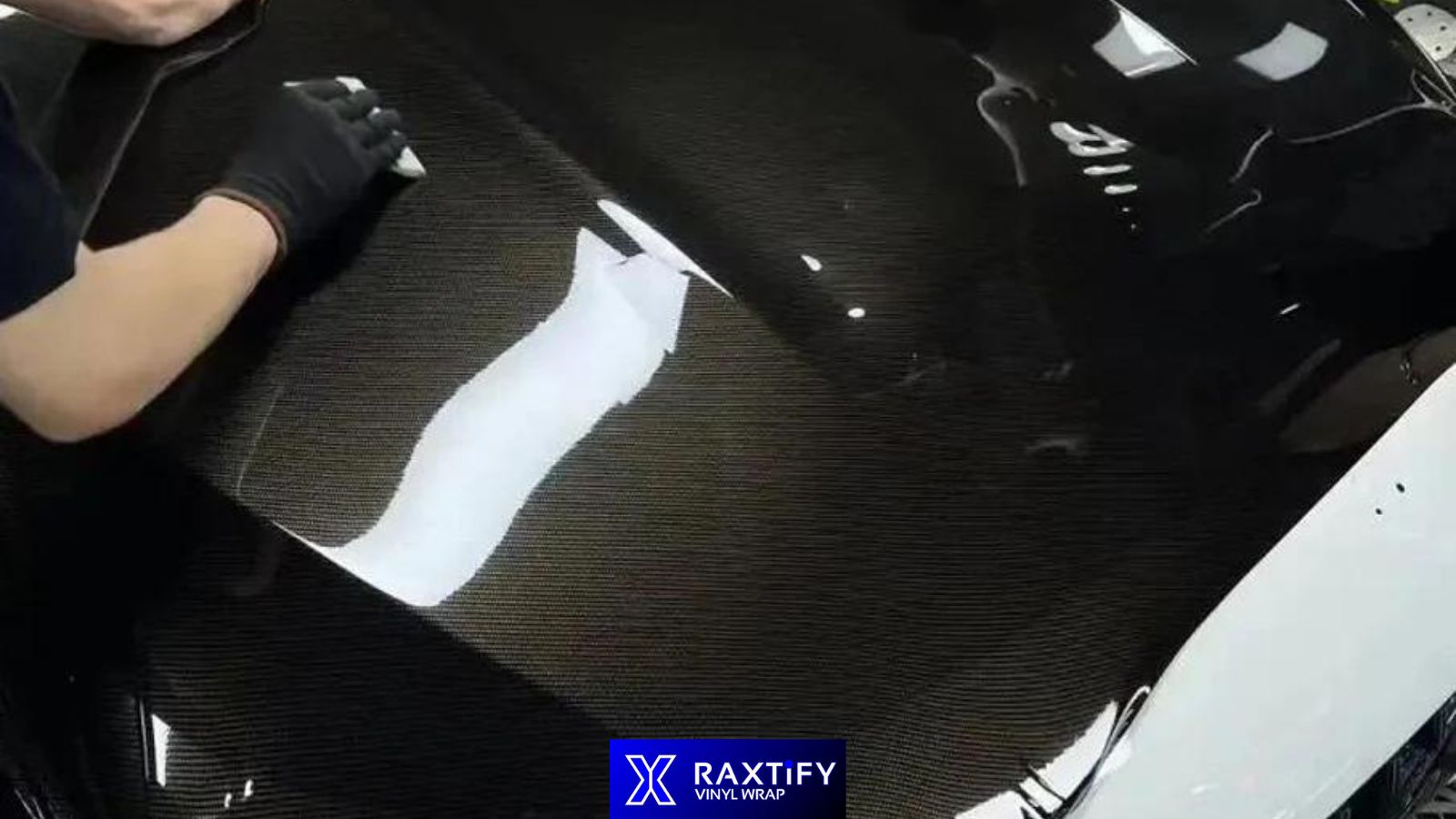
What Does a Carbon Fiber Wrapped Hood Look Like?
A carbon pattern is easily visible on a broad hood from the front and 3/4 positions. The traditional woven carbon will make a continuous directional pattern throughout the panel, making alignment more conspicuous on a large surface area.
The pattern of forged carbon is comprised of irregular fragments and differs in appearance from a repeated diagonal weave. It does not produce the same continuous line across the hood.
Shape also has an impact on the look—hood shape is significant. The center ridges, raised sections, vents, and scoops can disrupt reflections, and can make changes in pattern direction or distortion caused by stretching easier to notice. Such moving reflections are more noticeable on gloss carbon finishes, while matte finishes diffuse them more strongly.
Why do drivers choose to wrap their hoods in carbon fiber films?
The hood allows for easy redecoration of the appearance of a vehicle without the need to replace the original panel. This is a place where a carbon fiber pattern is particularly evident, being visible from the front, above and at three-quarter angles.
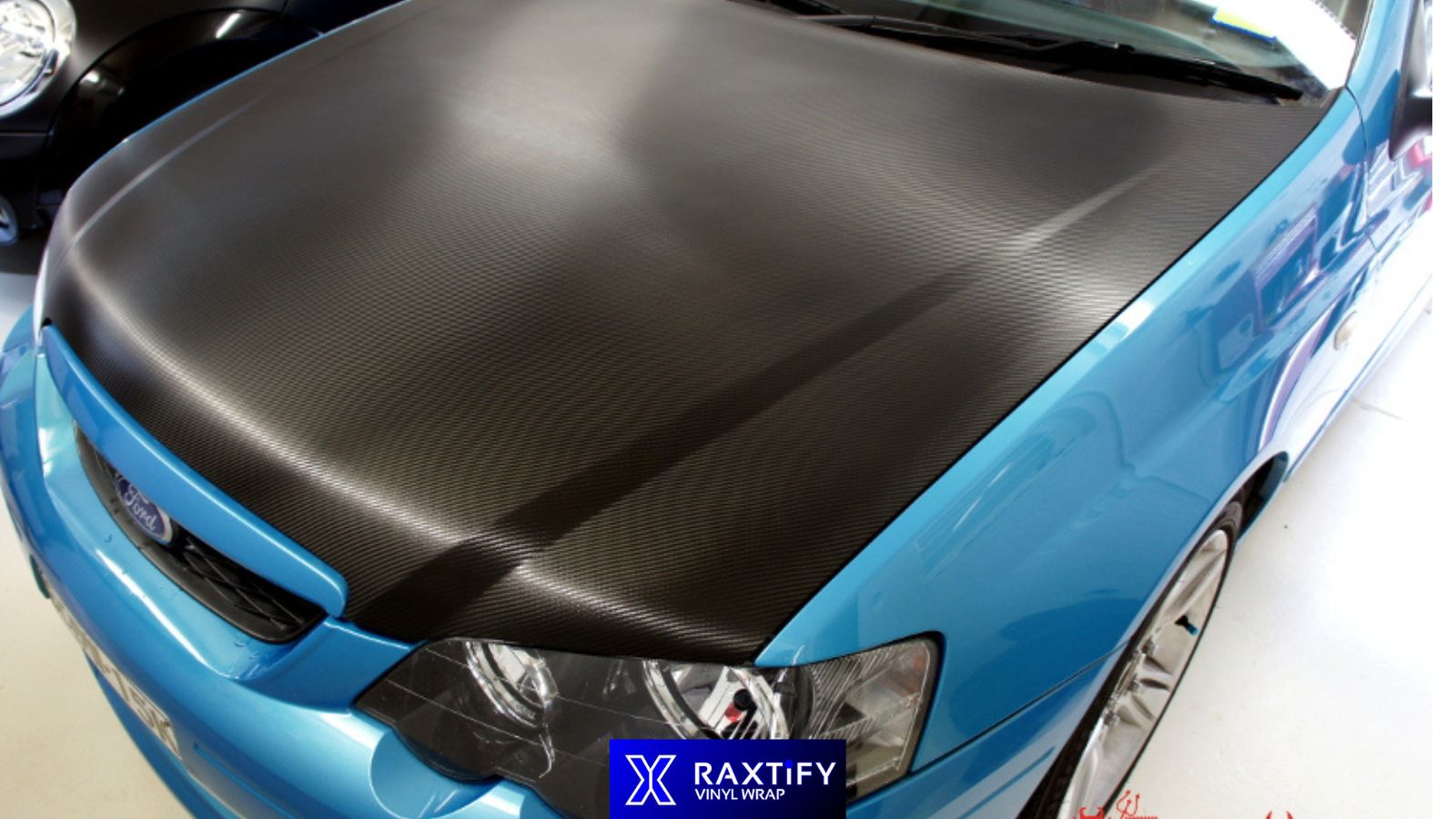
Carbon fiber vinyl is also a layer of film that is placed over the original paint. This layer may help to minimize direct contact from daily wear and tear, scuffs, minor abrasions, exposure to the sun, road grime and other environmental pollutants. The level of protection is determined by the film, the nature of contact and usage of the vehicle.
What if I want to switch from a carbon fiber look to something else?
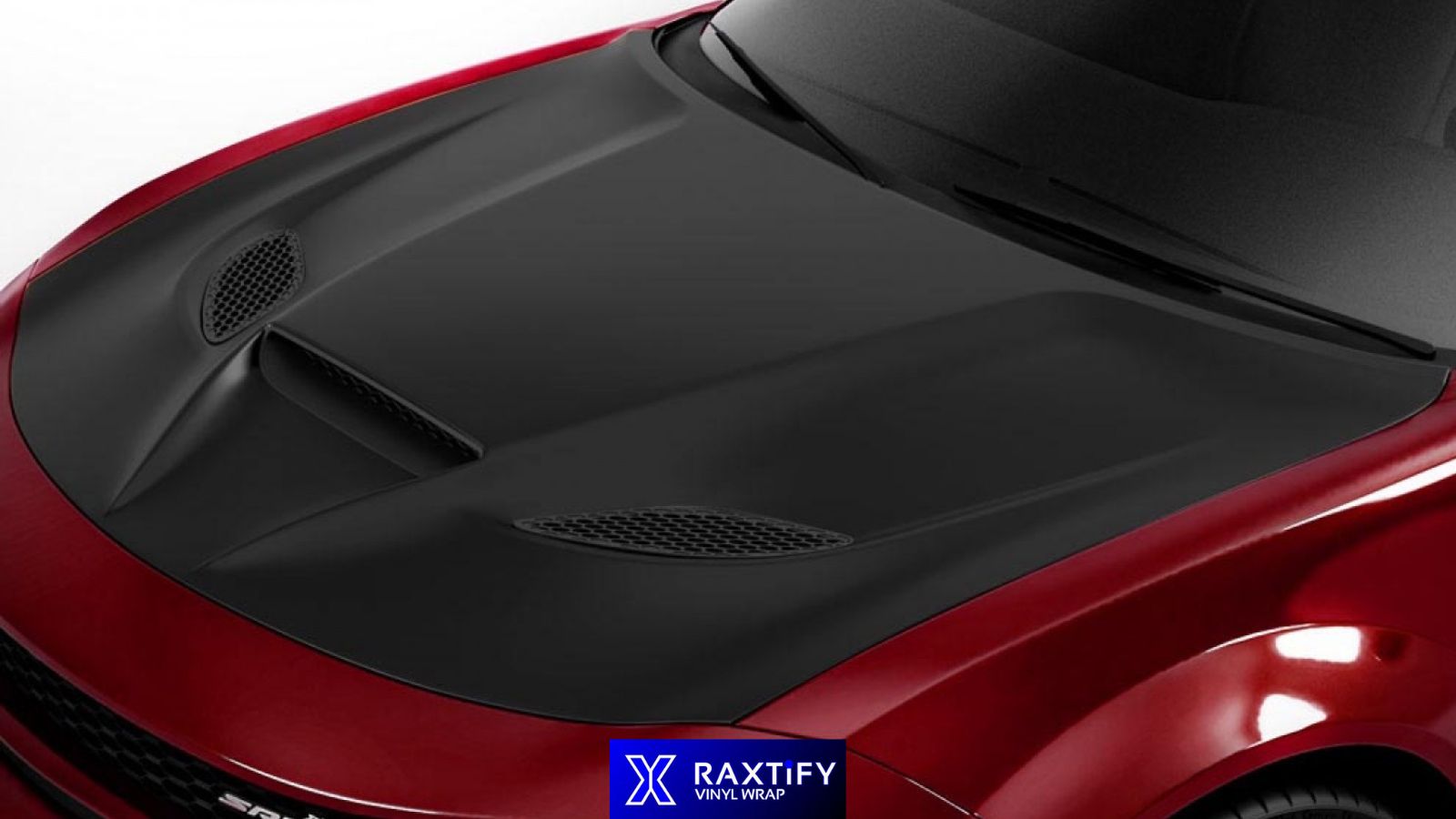
Effortlessly changing the appearance of your vehicle is possible with carbon fiber vinyl, a versatile material that allows for easy removal and replacement with another film. We highly recommend entrusting this task to a professional shop, as the removal of the tint demands specialized skills and equipment. If you're contemplating a new look, transitioning from carbon fiber to options such as matte black, chrome, or even a camouflage design is a seamless process!
Hiring professional services can help make the transition smoother and reduce the risk of installation or removal problems.
How Much Carbon Fiber Vinyl Do You Need to Wrap a Hood?
Most car hoods will not need a full roll of vinyl. Passenger-car hoods typically require 5-7 linear feet, and larger SUVs and pickup trucks require 6-8 linear feet, with a standard 60” (5-ft) width roll. It's still determined by the hood width, front-to-rear length and whether the hood has vents, scoops, or deeper contours.
For RAXTiFY carbon fiber vinyl, use the following sizes as a starting point:
| Hood Type | Typical Vinyl Needed | RAXTiFY Size to Consider |
|---|---|---|
| Small car / sports car | 5 ft × 5–6 ft | 5 ft × 6 ft |
| Sedan / hatchback | 5 ft × 6–7 ft | 5 ft × 6 ft if measurements fit; otherwise 5 ft × 10 ft |
| Crossover / midsize SUV | 5 ft × 6–7 ft | 5 ft × 10 ft when more than 6 ft is needed |
| Large SUV / pickup | 5 ft × 7–8 ft | 5 ft × 10 ft after checking hood width |
| Hood + mirror caps / extra material for a first installation | — | 5 ft × 10 ft |
These are range estimates and not guarantees of fit for any specific vehicle. Current sizing references fit the majority of cars at 5-7 linear feet (LFT), and larger SUVs and trucks at 6-8 feet, while RAXTiFY's 60-inch wide carbon fiber film comes in both sizes 5X6 ft and 5X10 ft.
How Much Does a Carbon Fiber Hood Wrap Cost?
A professionally fitted carbon fibre hood wrap usually runs in the vicinity of $350-$650 for most drivers in the U.S. A simple sedan or coupe hood can be anywhere from $350 to $450, and a larger hood, or one with vents, scoops, sharp ridges, or harder edge work, can easily get to $500 to $650. A more intricate or larger-sized hood job might have a price of more than $800.
In comparison, today's real carbon fiber replacement hoods are typically much more expensive. Major aftermarket carbon fiber hood suppliers currently offer many applications around $1,200-$2,000+, while some larger or double-sided carbon fiber hoods can exceed $3,000 before shipping and installation.
Hood size, film selection, surface preparation and complexity of the panel are usually the factors that change the wrap quote the most. A plain hood with no vents will remain in the lower half of range; vents and scoops, existing film removal, deeper recesses, or other edge finishing will add labour.
Typical Carbon Fiber Hood Wrap Cost
| Typical Carbon Fiber Hood Wrap Cost | |
|---|---|
| Option | Typical U.S. Cost |
| DIY carbon fiber vinyl | $80–$200 |
| Standard professional hood wrap | $350–$450 |
| Larger or more complex hood | $500–$650 |
| Complex / oversized hood | Up to about $800 |
| Real carbon fiber replacement hood | About $1,500–$2,400+ |
Benefits of wrapping the hood of your vehicle
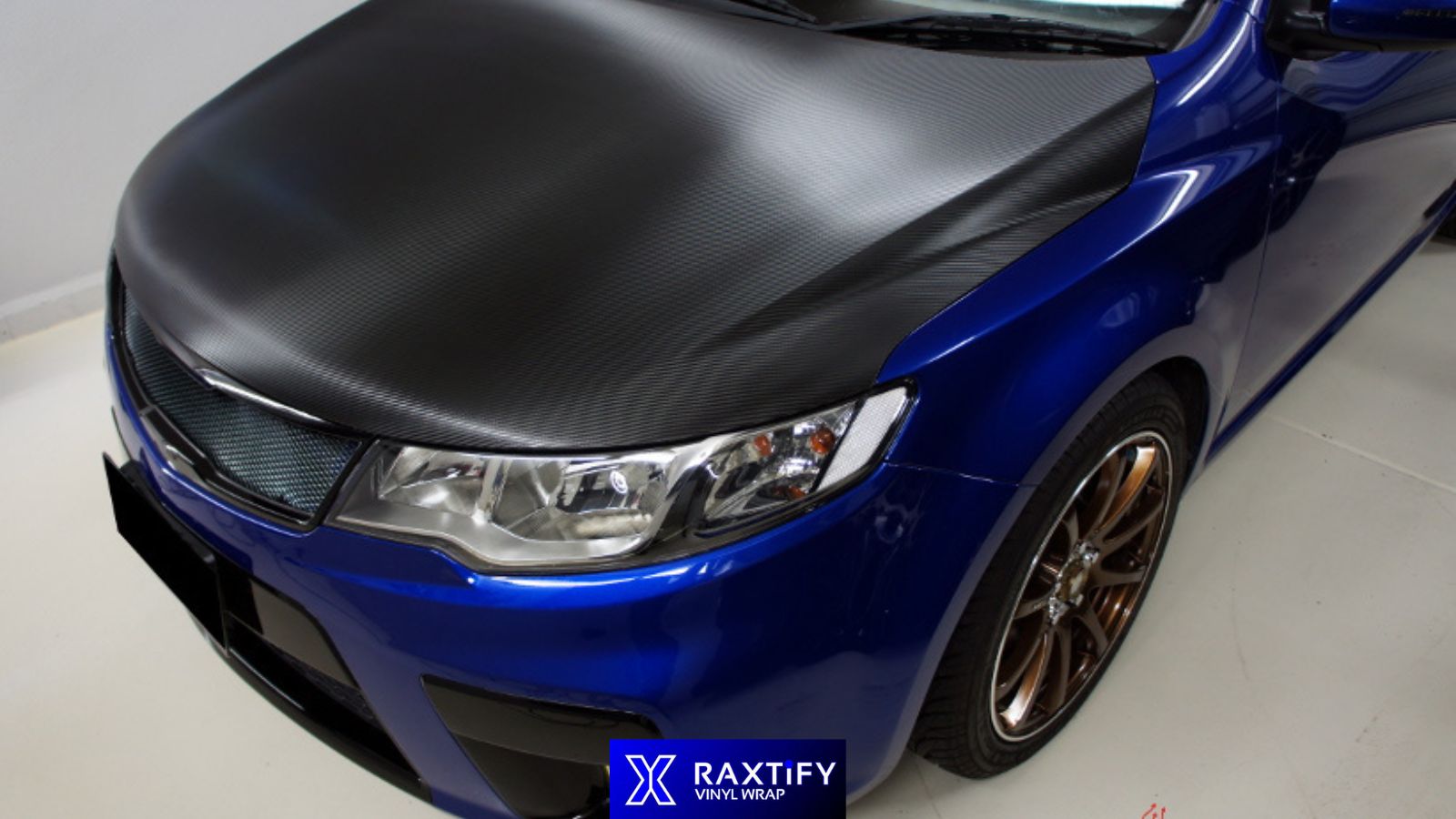
A carbon fiber hood wrap replaces one of the most noticeable panels of the car without the need to replace the original hood. The large surface also provides enough space for woven or forged patterns, as well as matte and/or gloss finishes, to be clearly visible.
Vinyl provides a protective surface over the original paint. It can protect the covered surface from light scratches, scuffs, mild abrasions, UV exposure, road grime, stains, etc. and from common environmental contact. Taking that surface exposure first means that some of the paint underneath the film may not suffer direct wear. The hood is also one of the parts that is most vulnerable to road debris. Vinyl will help block minor surface contact.
Some owners opt for vinyl because it is less expensive. It's significantly cheaper than installing an actual carbon fiber hood on the existing hood and the film can be removed or replaced if you wish to change the appearance later.
Different Type Carbon Fiber for Your Car Hood
Various carbon fiber styles will affect the amount of texture, reflection and pattern throughout the hood. The type of vehicle is not the most important factor, it's more about how you would like the hood to look on your car.
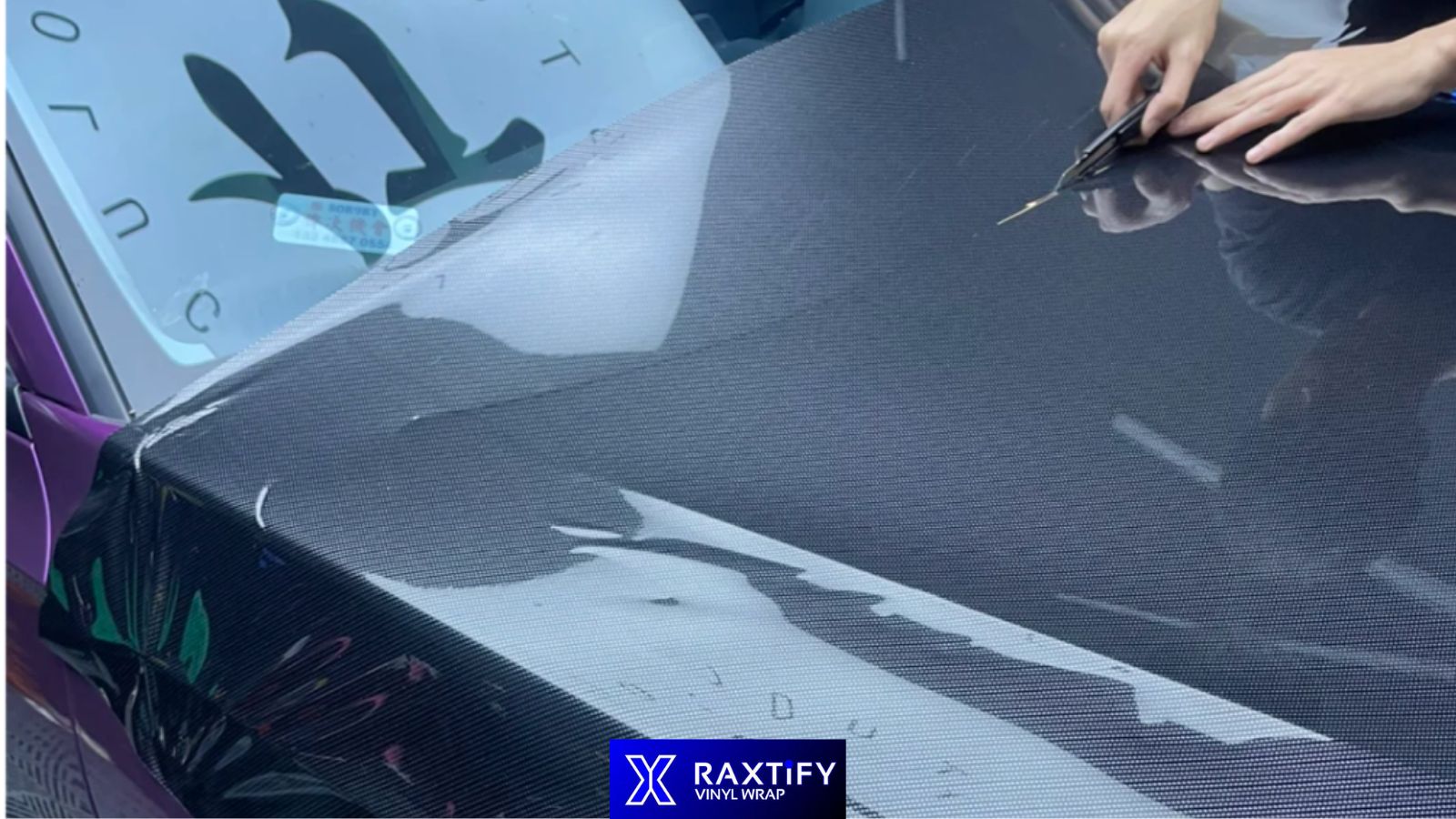
1. 6D Carbon Fiber Black Vinyl Wrap
The 6D Carbon Fiber Black Vinyl Wrap is a traditional dark carbon-style wrap with a more reflective surface effect. The pattern is repeated and more noticeable on a large hood panel, particularly as light plays across it.
2. Black Forged Carbon Fiber Vinyl Wrap
Black Forged Carbon Fiber Vinyl Wrap is a vinyl wrap that has a non-weave appearance of irregular shapes. This creates less directional emphasis than a standard woven carbon pattern and gives the hood a different appearance compared with a standard diagonal weave of carbon.
3. Black Gold Forged Carbon Fiber Vinyl Wrap
Black Gold Forged Carbon Fiber Vinyl Wrap uses a forged-style pattern and adds a touch of gold. The pattern is more prominent than the regular black carbon and makes the pattern more noticeable.
4. Matte Carbon Fiber Gold Vinyl Wrap
Unlike high-gloss carbon wraps, Matte Carbon Fiber Gold Vinyl Wrap has lower surface reflections. The carbon-inspired pattern remains visible without relying on reflected highlights to the same extent.
What Makes a Carbon Fiber Hood More Difficult to Wrap?
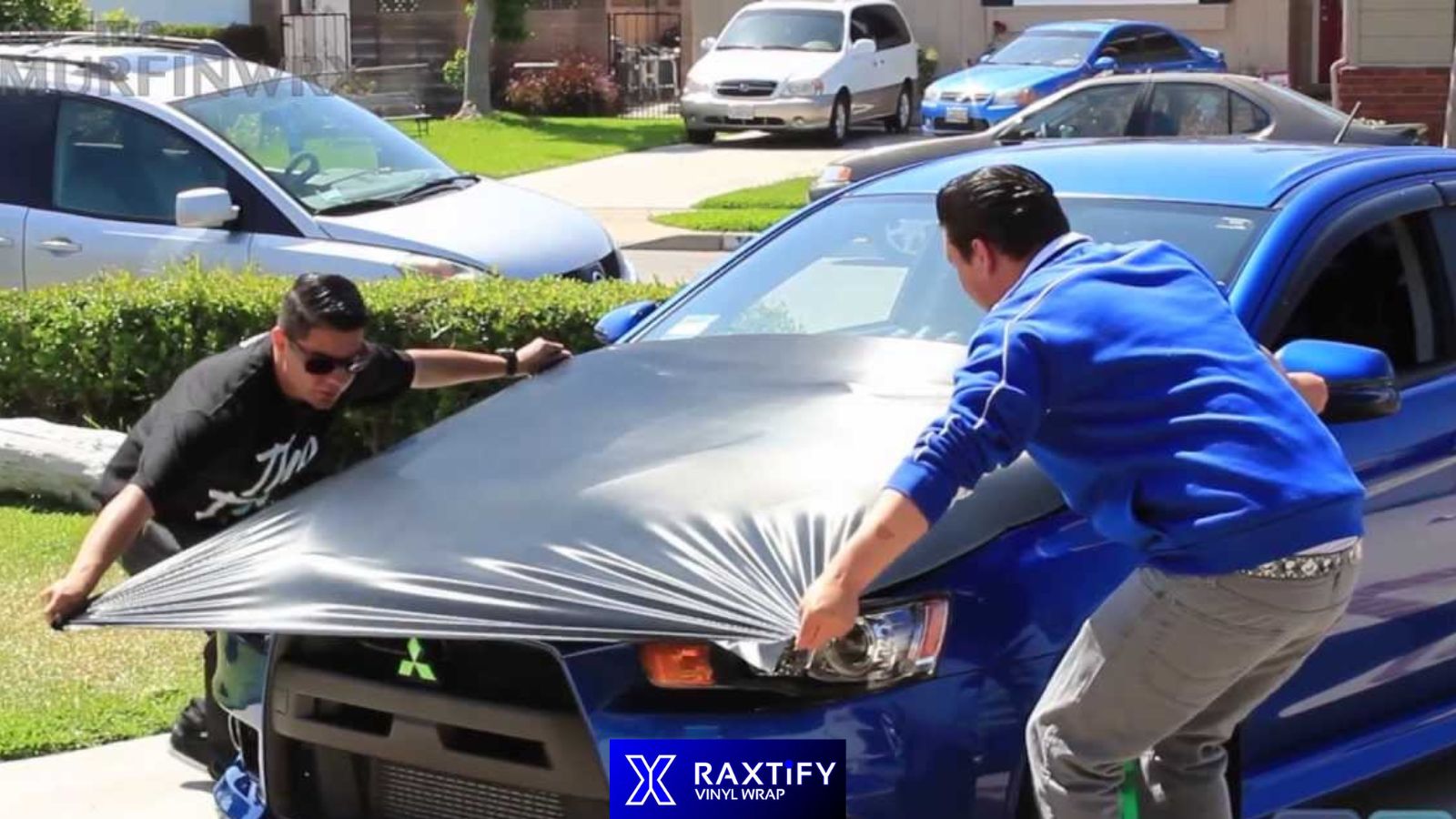
A relatively flat hood can be one of the easier exterior panels to wrap, although carbon fiber patterns can make some installation mistakes easier to see.
Look for the direction of the carbon pattern on the hood before applying the film. Even if the edges of the panel are clean, a slightly rotated sheet can cause the weave to appear uneven.
Only stretch the film as much as it requires to fit into the panel. Over-stretch will open or elongate a repeated carbon pattern. A hood with a vent or a scoop, sharp ridges, or deeper pockets might need more planning than a flat panel.
To prepare, apply, heat, trim and finish the edges, check out our How to Wrap a Car Hood guide.
Carbon Fiber Hood Wrap FAQ
Q1. Does carbon fiber hood vinyl protect against rock chips?
A: Carbon fiber vinyl provides a protective layer over the hood, and can help reduce direct contact between the paint and light road debris that can cause scratching and scuffing.
Q2. Can a hood with vents or scoops be wrapped in carbon fiber vinyl?
A: Yes, but deeper recesses, sharp edges and vents can make installation more complex. There is a need for more attention to pattern direction and additional material planning for these areas.
Q3. Does stretching affect the carbon fiber pattern?
A: Overstretching can alter the length and shape of a repeating carbon pattern. This is particularly apparent if one part of the pattern is elongated, and another part is more square.
Q4. How should I clean a carbon fiber wrapped hood?
A: Use a mild automotive soap, water and a soft microfiber towel. Don't use scrubbing or harsh chemicals which can damage the vinyl. As the hood is a horizontal panel, it is exposed to the sun and environmental factors regularly, too, and so contamination should not be left on the film for long periods.
Conclusion
A carbon fiber hood wrap is not the same as an actual carbon fiber hood; rather, it is placed over the existing paint and alters the appearance of the factory hood. The outcome will largely be determined by the pattern of the carbon, the shape of the hood and the quality of the installation, particularly with directional weaves. In some passenger cars, a 5-ft wide sheet with about 5–7 linear ft of material is sufficient, but larger or more complicated hoods require more film. It's always better to measure the panel before you buy it.