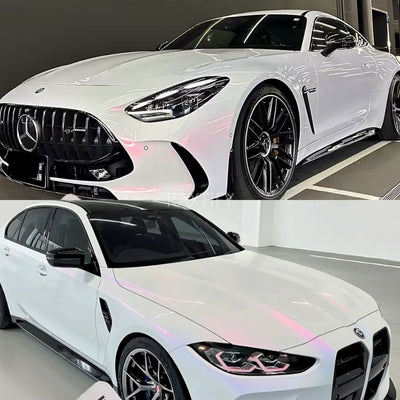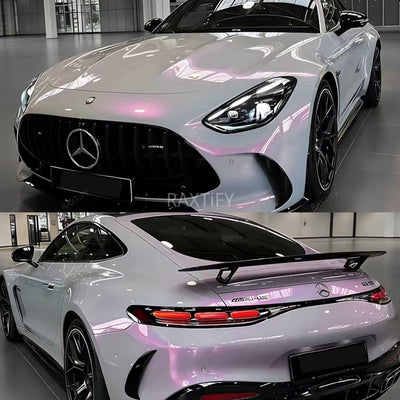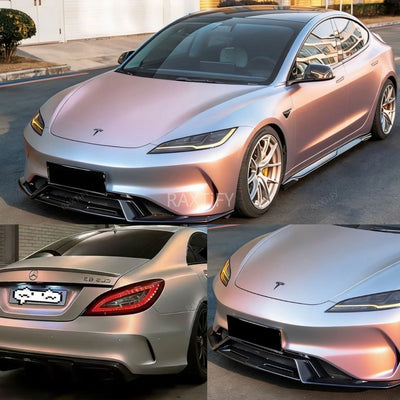

This guide focuses on the 2015–2023 Dodge Charger SRT Hellcat, including both standard-body and Widebody models. For most Hellcats, we recommend gloss metallic, satin, gloss, or color-shift finishes, while chrome is better suited to more dramatic show-car builds. A standard-body Hellcat typically needs around 69 feet of 5-foot-wide vinyl, while a Widebody or first-time DIY project is safer with about 75 feet. Professional full-wrap costs generally start around $3,500–$5,500, with Widebody and specialty finishes often reaching $6,000+.

Why Wrap a Dodge Charger Hellcat?
The Dodge Charger Hellcat already has an aggressive shape, but vinyl wrap gives you much more freedom to change how that shape is perceived. A deep metallic finish can emphasize the hood and rear-quarter lines, while satin or matte can make the car look lower, darker, and more understated. On a Widebody Hellcat, stronger finishes such as color shift, chrome, or custom graphics can take advantage of the wider fenders and larger body surfaces.
From our experience at RAXTiFY, the Hellcat is one of those cars that can carry bold colors without looking overdone. Purple, green, red, black, bronze, and multi-tone finishes all work well when the finish matches the character of the build.
A wrap also lets owners change the appearance without permanently repainting the vehicle. That matters on a Hellcat, especially if you want to preserve the factory finish or return the car to its original look later.
For most owners, the real value is flexibility: you can build a clean OEM-inspired Hellcat, a stealth street car, or a much louder show-car setup without committing to a permanent color change.

What Makes a Dodge Charger Hellcat Different to Wrap?
A Dodge Charger Hellcat is not the most difficult vehicle to wrap, but it is also not a car we would treat like a simple beginner project. Its large panels can make some areas relatively straightforward, while the performance hood, bumpers, and Widebody bodywork require much more careful material planning.
At RAXTiFY, we recommend looking at the Hellcat panel by panel rather than assuming the entire car has the same installation difficulty.
Large Body Panels
One advantage of the Charger Hellcat is its relatively large body surfaces. The doors, roof, trunk area, and much of the quarter panels provide broad sections where vinyl can be laid and positioned without dealing with extremely tight body contours.
For an experienced installer, these areas are generally more manageable than the deeply sculpted panels found on some smaller sports cars.
However, large panels also make installation mistakes more visible. Uneven tension, trapped air, film distortion, or poor alignment can be noticeable across a wide uninterrupted surface.
We recommend positioning the film carefully before applying heavy tension and avoiding unnecessary stretching just to make a large sheet fit.
This becomes even more important with metallic, color-shift, and other directional films, where inconsistent film orientation can make adjacent Charger panels reflect light differently.
Performance Hood and Heat Extractors
The Hellcat hood deserves more attention than a standard flat hood.
Depending on the model year and configuration, Charger Hellcat hoods may include air inlets, heat extractors, vents, and more aggressive surface contours. These areas introduce additional edges and recesses that require careful film positioning.
A common mistake is stretching the vinyl aggressively into a vent or recessed section. While the film may initially appear to conform, excessive tension can increase the chance of lifting or shrinking back around the edges later.
Our preference is to use controlled heat and distribute tension over a wider area instead of forcing the film into a recess from one direction.
The hood should also be planned before cutting material from the roll. Performance hoods can require more working material than their basic width and length measurements suggest, especially when enough film is needed to wrap cleanly around edges and openings.

Widebody Fender Flares
The Widebody configuration is one of the biggest differences when estimating and installing vinyl on a Charger Hellcat.
The extended fender areas create additional surface area and more pronounced curves around the wheel arches. These sections require enough film not only to cover the visible fender but also to provide working room for positioning, stretching, trimming, and wrapping the edges properly.
This is one reason we generally recommend more material for a Hellcat Widebody than for a standard-body Charger.
The fender flares also make tension management more important. Pulling too aggressively around the wheel arch can distort the finish or create excessive stress near the edges.
With metallic or color-shift films, orientation matters here as well. A Widebody flare installed in a different direction from the adjoining quarter panel may reflect differently, even when both pieces come from the same roll.
For a Widebody Hellcat, we would rather have a little extra vinyl available than try to make every panel fit using the absolute minimum amount of material.
Front and Rear Bumper Complexity
The front and rear bumpers are usually among the most demanding parts of a Charger Hellcat wrap.
Compared with the doors or roof, the bumpers include more curves, openings, edges, recessed areas, and changes in direction. The Hellcat's aggressive front fascia makes careful tension control especially important.
These are also the panels where DIY installers are most likely to lose material. A section can become unusable because of:
- Excessive stretching
- Incorrect positioning
- Contamination
- Overheating
- Poor relief-cut placement
- Insufficient material around an edge or opening
At RAXTiFY, we generally recommend reserving generous pieces for both bumpers instead of cutting them from whatever material remains at the end of the project.
The rear bumper also requires careful planning around corners and lower sections where the film changes direction quickly.
For this reason, when someone asks us whether the Charger Hellcat is beginner-friendly, our answer is usually: the large flat panels are manageable, but the bumpers, performance hood, and Widebody areas are where installation skill matters most.
That difference is also why we prefer a realistic material allowance rather than trying to wrap a Hellcat with the smallest possible roll.
Best Vinyl Wrap Finishes for a Dodge Charger Hellcat
The Dodge Charger Hellcat has a large, muscular body with pronounced shoulders, a performance hood, and—on Widebody models—very noticeable fender flares. Because of that, the finish you choose can change the character of the car almost as much as the color itself.
From our experience with Charger builds, we generally prefer finishes that either highlight the Hellcat’s body lines or deliberately make the car look darker and more aggressive. Gloss metallic, satin, and deeper gloss colors are usually the easiest places to start, while color shift and chrome are better suited to owners who want maximum visual impact.
If you are still comparing surface styles, you can browse RAXTiFY’s vinyl wraps by finish before narrowing down the exact color.
Gloss Metallic — Best All-Around Choice
For most Charger Hellcats, gloss metallic is our favorite all-around finish.
The Hellcat has enough flat surface area for metallic particles to show clearly, but it also has strong curves around the hood, doors, rear quarters, and Widebody fenders. Gloss metallic reacts well to both. Under direct light, the metallic effect creates brighter highlights across those areas; in shade, the same wrap usually looks deeper and more understated.
We especially like darker metallic colors on the Hellcat because they keep the car aggressive while giving it more depth than a basic solid finish.
If you want something that still feels relatively close to a premium automotive paint finish but noticeably more customized, gloss metallic would be our first recommendation.
Satin — Best for an Aggressive Street Look
Satin is one of the best finishes for a Hellcat when the goal is a low-gloss, aggressive street appearance.
Unlike a completely matte wrap, satin still reflects enough light to reveal the Charger’s shoulder lines, hood shape, and Widebody fenders. That slight reflection matters on a car with this much bodywork. A finish that is too flat can sometimes visually soften those details.
For a blacked-out Hellcat with dark wheels, tinted glass, and subtle exterior trim, satin is often the finish we would choose before matte.
It gives the car a stealthier appearance without completely removing the visual definition of the body.
Gloss — Best for a Clean Paint-Like Finish
If you want your Hellcat to look more like it left the factory in a completely different paint color, gloss vinyl is usually the safest choice.
Gloss creates the familiar reflections people associate with automotive paint. It also works particularly well when the color itself is supposed to be the main focus rather than the surface texture.
For a daily-driven Hellcat, gloss is also one of our more practical recommendations. Its appearance is familiar, it works with almost any color family, and owners do not have to commit to the more specialized visual character of satin, matte, chrome, or color shift.
Color Shift — Best for a Show-Car Build
A Charger Hellcat gives color-shift vinyl plenty of surface area to work with.
As light moves across the hood, doors, quarter panels, and Widebody fenders, a color-shift wrap can reveal noticeably different tones from different angles. On such a large car, the transition is usually much more dramatic than it appears on a small sample.
Color shift makes the most sense for a show car, weekend build, content car, or owner who specifically wants people to notice the wrap.
One installation consideration is that many color-shift films are directional. Adjacent panels need to be installed in a consistent orientation, or their color behavior may not match correctly. Because of that, we recommend planning the entire vehicle before cutting the roll.
Chrome — Best for Maximum Visual Impact
If subtlety is not the goal, chrome can completely transform a Charger Hellcat.
Mirror chrome reflects much more light than conventional gloss or metallic vinyl, making the Hellcat look dramatically different even from a distance. The effect becomes especially strong across the Widebody fenders and large side panels.
Both silver chrome and gold chrome can work well on the platform.
However, we generally would not recommend a full chrome Hellcat as a first DIY wrap project. Chrome films tend to be less forgiving during installation, and excessive stretching, overheating, or poor tension management can make imperfections much more visible.
The Charger’s bumpers, hood details, and Widebody areas make that difficulty even more noticeable.
For an experienced installer or professionally installed show build, though, chrome delivers about as much visual impact as you can get from a full color-change wrap.
Matte — Best for a Stealth Build
Matte removes most surface reflection and gives the Hellcat a flatter, darker, more understated appearance.
Matte black is the classic example, but matte gray, matte army green, matte orange, and other subdued colors can also work well when the goal is a stealth-oriented build.
Compared with satin, matte tends to hide more of the natural reflection across the Charger’s body. That can make the car look especially aggressive, but it may also reduce some of the visual definition around the fenders and body lines.
For that reason, we usually prefer satin over matte for most Hellcats, particularly on Widebody models.
We would choose matte when the owner specifically wants the flattest possible appearance rather than simply a low-gloss finish.
Matte wraps also benefit from more careful cleaning habits because gloss-enhancing waxes and polishing products are generally not appropriate for maintaining a consistent matte appearance.
Carbon Fiber — Better for Accents
Carbon fiber vinyl can work extremely well on a Charger Hellcat—but we generally prefer it as an accent material rather than a full-body finish.
Good areas for carbon fiber include:
- Hood sections
- Roof
- Mirrors
- Rear spoiler
- Splitter details
- Interior trim
- Smaller exterior accents
Used selectively, carbon fiber can complement the Hellcat’s performance-oriented styling without overwhelming the rest of the car.
For example, a gloss metallic or satin body paired with carbon fiber mirrors, roof, or hood details usually creates a more intentional result than covering every exterior panel in carbon fiber-pattern vinyl.
We also recommend keeping the weave direction consistent between matching panels. Just like directional metallic and color-shift films, rotating carbon fiber vinyl incorrectly can make adjacent pieces look mismatched.
For most Hellcat builds, our preference is simple: choose the main color and finish first, then use carbon fiber to highlight specific performance details.
Best Vinyl Wrap Colors for a Dodge Charger Hellcat
The Dodge Charger Hellcat has enough size and visual presence to carry both understated and extremely bold wrap colors. In our experience, the best choices are colors that either emphasize the Hellcat’s wide stance and aggressive body lines or create enough contrast to make those details stand out.
If you are still deciding between color families, you can browse RAXTiFY’s shop by color page to compare black, red, purple, green, blue, gray, white, pink, and other vinyl wrap colors.
Black — Best for a Classic Aggressive Hellcat
Black is one of the most natural colors for a Charger Hellcat because it reinforces the car’s already aggressive character.
Gloss black creates a cleaner, paint-like appearance, while satin black gives the car a more understated street-build look. Matte black pushes the stealth theme even further, although it can soften some of the Hellcat’s body lines compared with satin or gloss.
For a daily-driven Hellcat, we generally prefer satin black or gloss black over a completely flat matte finish. Satin still gives the car a darker, more serious appearance while allowing light to define the hood, shoulders, and Widebody fenders.
Red — Best for a Performance-Inspired Look
Red fits the Hellcat particularly well because it naturally reinforces the car’s muscle-car and performance identity.
A standard gloss red creates a clean, traditional look, but we usually prefer gloss metallic, candy-inspired, or deeper red finishes on a Charger. The additional depth helps break up the large body panels and creates stronger highlights across the doors and rear quarter panels.
Chrome red can also work extremely well on a show build, although we would reserve it for owners who specifically want maximum visual impact rather than a subtle daily-driver finish.
Purple — Best for a Bold Street Build
Purple is one of our favorite color families for a Charger Hellcat.
The Hellcat has enough body mass to carry a deep purple without the color overwhelming the car, and metallic purple becomes especially effective on Widebody models because the larger fenders create more areas for highlights and shadows.
For a balanced street build, we usually prefer deep gloss metallic purple. If the goal is something more dramatic, a purple-based color-shift finish can change significantly between sunlight, shade, and nighttime lighting.
Purple works particularly well for owners who want something noticeably different from black, gray, or red without going as extreme as full chrome.
Green — Best for a Distinctive Muscle-Car Look
Green can give a Hellcat a very different personality depending on the shade.
Dark metallic green creates a more premium and mature appearance, while brighter greens produce a much more aggressive street or track-inspired look. Satin military-style greens can also work well with black wheels, black trim, and carbon fiber accents.
From what we have seen on larger performance cars, deep metallic and satin greens tend to work especially well because the Charger’s broad panels give the color enough space to show its depth.
For owners who want something uncommon without relying on a color-shift or chrome finish, green is one of the strongest options.
Blue — Best for a Clean but Sporty Build
Blue is a relatively safe choice for a Charger Hellcat, but it does not have to look conservative.
Deep metallic blue gives the Hellcat a cleaner, more refined appearance, while bright blue creates stronger contrast against black grilles, wheels, spoilers, and window trim.
We particularly like midnight blue, metallic navy, and brighter metallic blues for daily-driven Hellcats because they still look distinctive without requiring the visual commitment of chrome, pink, or a strong color-shift finish.
If you want a performance look that is easier to live with every day, blue is a strong option.
Gray and Silver — Best for an OEM-Plus Look
Gray and silver are ideal for owners who want the Hellcat to look customized without appearing heavily modified.
Satin gray, gunmetal, metallic silver, and liquid-metal-inspired finishes can emphasize the Charger's hood, shoulder line, and Widebody arches while keeping the overall appearance restrained.
This is one of the color families we often recommend when someone wants an OEM-plus result rather than a show-car look.
A darker gunmetal finish usually feels more aggressive, while brighter silver makes the body lines and reflections more obvious.
White — Best for a Clean High-Contrast Build
White creates a clean foundation for the Hellcat’s darker exterior details.
A white wrap paired with black wheels, grille, spoiler, hood details, mirrors, or roof can create one of the strongest high-contrast combinations without relying on an unusual color.
For most Hellcats, we prefer a high-gloss white or pearl-influenced white because the additional reflection keeps the large body surfaces from appearing too flat.
White is particularly effective if the rest of the build already includes a significant amount of gloss-black or carbon-fiber detailing.
Pink — Best for a More Unconventional Hellcat
Pink is not the traditional choice for a Hellcat, which is exactly why it can work so well.
A large, aggressive performance sedan wrapped in pink creates a strong contrast between the character of the vehicle and the color. Depending on the finish, the result can range from clean and playful to extremely dramatic.
For a simpler build, gloss or gloss metallic pink works well. For something more distinctive, a pink gradient, black-to-pink fade, or custom printed design can use the Charger's long body to create a much more dynamic effect.
If the goal is to make the Hellcat immediately recognizable and personal, pink is one of the strongest options available.
Standard-Body vs Widebody Hellcat: What Changes When Wrapping?
The difference between a standard-body Charger Hellcat and a Hellcat Widebody is not just visual. From a wrapping standpoint, the Widebody introduces more surface area, more pronounced fender contours, and additional edges that require careful film placement.
In our experience at RAXTiFY, a standard-body Hellcat is already a fairly large full-size sedan to wrap, but the Widebody demands more planning—especially around the fender flares and complex curves. We would also give a Widebody project a larger material allowance rather than trying to work with the absolute minimum amount of vinyl.
| Wrapping Factor | Standard-Body Hellcat | Hellcat Widebody |
|---|---|---|
| Fender Design | Cleaner, more conventional fender profile with fewer aggressive transitions. | Wider fender flares add more compound curves, edges, and transitions to manage. |
| Overall Wrap Complexity | Moderate to difficult for a full-car wrap. | More difficult because of the additional Widebody contours and fender areas. |
| Material Allowance | Around 69 ft of 5-foot-wide vinyl is a practical starting point for a carefully planned wrap. | We generally prefer around 75 ft of 5-foot-wide vinyl, especially for DIY installations. |
| Fender Installation | Relatively straightforward compared with the Widebody, although proper edge finishing is still important. | Requires more careful tension control around flare edges and curved surfaces. |
| Front & Rear Bumpers | Already among the more difficult areas of the vehicle. | Body-width changes and adjacent Widebody panels make overall layout and alignment less forgiving. |
| Directional Vinyl | Requires consistent orientation across doors, fenders, and quarter panels. | Requires even more planning because larger and more complex fender sections reduce your ability to rotate leftover pieces. |
| Risk of Material Waste | Moderate when panel layout is planned correctly. | Higher, particularly around fender flares, bumpers, and specialty-film installations. |
| DIY Difficulty | Possible for a patient installer with some wrapping experience. | Not our first choice for a beginner's first full-car wrap. |
| Finish Impact | Gloss, metallic, satin, and matte finishes all work well with the Hellcat's long body lines. | Metallic, satin, and color-shift finishes can make the wider fenders and aggressive stance much more noticeable. |
One point we emphasize with Widebody projects is not to compensate for complex curves simply by overstretching the film. More aggressive stretching can change the appearance of metallic or color-shift finishes and introduce unnecessary stress around edges and recessed areas. Good panel planning and adequate material are usually better solutions.
For a standard-body Hellcat, an experienced installer can work relatively efficiently with the large doors, roof, hood, and quarter panels. On a Widebody, we recommend spending more time planning the fender sections before making the first cut and keeping additional vinyl available in case a difficult section needs to be redone.
Visually, the Widebody also gives you more freedom to use dramatic finishes. The enlarged fenders catch light very differently from the standard body, which is one reason we particularly like deep metallic colors, satin finishes, and color-shift vinyl on Widebody builds.

How Much Vinyl Do You Need for a Dodge Charger Hellcat?
For most Dodge Charger Hellcat wrap projects, we recommend planning for around 69–75 feet of 5-foot-wide vinyl.
A standard-body Hellcat can often be completed with about 69 feet when the installer plans each panel carefully and avoids unnecessary waste. For a Hellcat Widebody, or for a first-time DIY installer, we would rather recommend around 75 feet to leave more room for the wider fenders, complex bumpers, trimming, and possible rework.
From our experience, trying to complete a full Hellcat wrap with only 59–60 feet can be unnecessarily tight. An experienced installer may be able to do it, but one failed bumper section or incorrectly cut panel can quickly leave you short.
The body configuration matters more than the Hellcat badge itself. A standard-body Hellcat does not automatically require dramatically more material than another standard-body Charger, while a Widebody generally deserves a larger safety allowance.
For a more detailed breakdown by body style, panel, and installer experience, see our guide on how much vinyl you need to wrap a Dodge Charger.
How Much Does It Cost to Wrap a Dodge Charger Hellcat?
A professional full wrap for a Dodge Charger Hellcat will typically cost around $3,500 to $6,000+ in the U.S., depending on the body style, vinyl finish, installer, vehicle condition, and how much disassembly is required.
A standard-body Hellcat wrapped in a conventional gloss, matte, or satin film will usually fall toward the lower end of that range. A Hellcat Widebody, or a project using color-shift, chrome, custom-printed, or other specialty vinyl, can push the total higher because both the material and installation become more demanding.
At RAXTiFY, we would not price a Hellcat simply because it carries a Hellcat badge. The more important factors are the actual body configuration and the finish being installed. A Widebody with complex fender surfaces and a specialty film will generally require more time and material than a standard-body car using a conventional gloss wrap.
DIY material costs are considerably lower, but they should still include enough vinyl for mistakes, tools, and extra material for difficult areas. If this is your first complete wrap, we would not recommend budgeting based on the absolute minimum amount of film.
For a full pricing breakdown by Charger body style and vinyl finish, see our Dodge Charger wrap cost guide.
FAQs About Dodge Charger Hellcat Wraps
Is a Hellcat Widebody Harder to Wrap?
Yes. A Charger Hellcat Widebody is generally more demanding to wrap than a standard-body Hellcat.
The wider fender flares add extra surface area and more complex contours, while the transitions around the fenders, bumpers, and adjoining panels require more careful film placement and tension control.
From an installation standpoint, the badge itself is not what makes the job harder—the Widebody bodywork is the important factor.
We would also allow more vinyl for a Widebody because larger starting pieces and occasional rework can increase material usage.
What Is the Best Wrap Finish for a Charger Hellcat?
For most Hellcats, our favorite all-around choice is gloss metallic.
The Charger has large body panels, pronounced shoulders, and aggressive hood and fender shapes. A metallic finish reflects enough light to emphasize those features without becoming as visually extreme as chrome.
We also like:
- Satin for an aggressive street build
- Gloss for a clean, paint-like appearance
- Color shift for a show-oriented build
- Matte for a darker stealth look
- Chrome for maximum visual impact
For a daily-driven Hellcat, we would generally choose gloss metallic, gloss, or satin before moving into more specialized finishes.
Can I Wrap a Charger Hellcat Myself?
Yes, but we would not classify a full Charger Hellcat as an easy beginner wrap.
The large doors and flatter body sections are relatively manageable, but the front bumper, rear bumper, hood details, fenders, and Widebody sections require considerably more skill.
A first-time installer should also expect to use more material than a professional because mistakes, overstretching, contamination, and miscuts are more likely.
If this is your first wrap project, starting with a smaller section such as the roof, hood, or trim can help you learn how the film behaves before attempting the entire vehicle.
Does the Hellcat Hood Make Wrapping More Difficult?
Yes, the Hellcat hood can add complexity compared with a simple flat hood.
Depending on the model year and hood design, the Hellcat may include air inlets, heat extractors, vents, and more pronounced contours. These features require additional attention when positioning the film, managing stretch, and finishing edges around openings.
The hood is still generally easier than a complex bumper, but we would not treat it like a basic flat panel.
If the vehicle has an aftermarket hood, measure and inspect it separately before estimating material because vent layout and surface shape can vary significantly.
How Long Does a Dodge Charger Hellcat Wrap Last?
A RAXTiFY vinyl wrap typically lasts around 2–3 years with proper installation and reasonable care.
Actual lifespan depends on factors such as:
- UV exposure
- Climate
- Outdoor parking
- Washing methods
- Vinyl finish
- Installation quality
- How frequently the car is driven
A Hellcat that spends most of its time outdoors in strong sun will generally age faster than one that is garaged.
Proper maintenance can help preserve the finish. For more detailed care recommendations, see how to care for a Dodge Charger wrap.
Can the Vinyl Wrap Be Removed Later?
Yes. Automotive color-change vinyl is designed to be removable.
When the film is installed over healthy factory paint and removed correctly, it should not damage the original finish. Proper removal usually involves controlled heat and careful peeling rather than pulling the film off cold or aggressively.
Extra caution is needed if the vehicle has:
- Repainted panels
- Failing clear coat
- Existing paint damage
- Poor previous bodywork
For a factory-painted Hellcat in good condition, vinyl wrap provides a reversible way to change the car's appearance without committing to a permanent repaint.
Final Thoughts
A Dodge Charger Hellcat already has an aggressive shape, so the best wrap usually enhances its wide stance, hood design, and strong body lines rather than hiding them. For most Hellcat builds, we tend to favor gloss metallic, satin, deep metallic colors, and color-shift finishes because they add depth while still showing the car’s contours clearly.
Standard-body and Widebody Hellcats should not be treated exactly the same during planning. Widebody fenders, complex bumpers, hood details, and specialty films can all increase installation difficulty and material waste, so choosing the right roll size and leaving enough extra vinyl matters.
For a daily-driven Hellcat, gloss or satin is usually the most practical place to start. For a show-oriented build, chrome, color shift, custom graphics, and gradient designs can create a much more dramatic result.
Whatever style you choose, plan the project around the actual body configuration, installation difficulty, and how you use the car—not just the color itself.