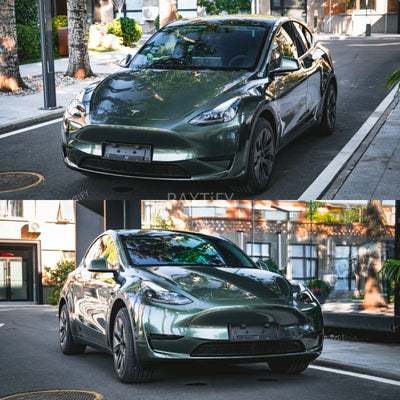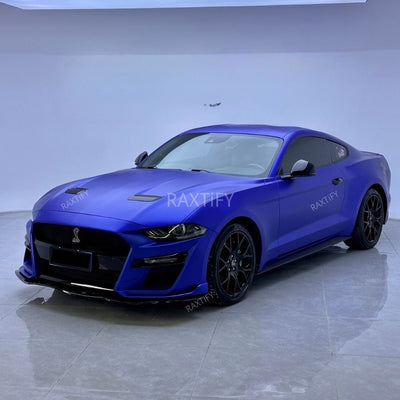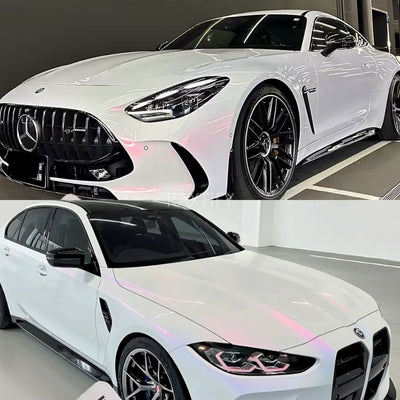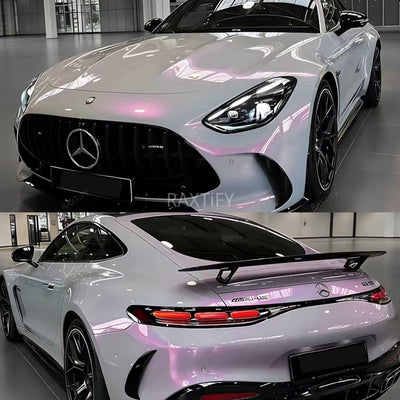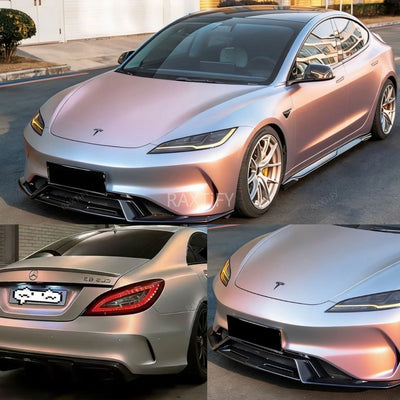

A full Dodge Charger wrap generally requires about 69–75 feet of 5-foot-wide vinyl. At RAXTiFY, we recommend 69 feet as a practical minimum for most standard-body Chargers rather than trying to complete the car with a tight 59 feet roll. For Widebody models or first-time DIY installers, 75 feet is the safer choice, giving you extra material for bumpers, fenders, trimming, and possible installation mistakes.

How Much Vinyl Do You Need to Wrap a Dodge Charger?
For most Dodge Charger projects, we recommend planning around 69 to 75 feet of 5-foot-wide vinyl. Although an experienced installer may be able to complete certain standard-body Chargers with less material, buying too little leaves almost no room for panel layout, trimming, repositioning, or redoing a difficult section.
From our experience with full-car wraps, 59 feet is simply too tight for most DIY Charger projects. It may work on paper based on vehicle dimensions, but real-world installation creates waste. Front and rear bumpers, complex curves, panel overlap, and cutting margins all consume more vinyl than a basic surface-area calculation suggests.
| Dodge Charger Type | Recommended Vinyl Amount | Best For |
|---|---|---|
| Standard-Body Charger | 5ft × 69ft | Experienced installers and typical full exterior wraps |
| Charger Widebody | 5ft × 75ft | Widebody models with extended fenders and more complex bodywork |
| First-Time DIY Wrap | 5ft × 75ft | Extra material for trimming, mistakes, and redoing difficult panels |
| 2024–2026 New-Generation Charger | 5ft × 75ft | New-generation two-door and four-door Charger models |
These figures assume 5-foot-wide automotive vinyl and include reasonable working allowance. Actual material use varies with installer experience, body configuration, film directionality, and whether mirrors, spoilers, door jambs, or other additional areas are wrapped.
Standard-Body Dodge Charger
For a standard-body Dodge Charger, around 65–69 feet of vinyl is a realistic working estimate, but we generally recommend starting with at least a 69-ft roll for a complete exterior wrap.
An experienced installer who plans every panel carefully may use less. However, we would not normally recommend buying only 59–60 feet for a full Charger wrap, particularly for a DIY project. Saving a few feet of material is rarely worth the risk of running short when you reach the bumpers or rear quarter panels.
If this is your first full-car installation, 75 feet gives you a much more comfortable safety margin.
Dodge Charger Widebody
For a Charger Widebody, we recommend approximately 69–75 feet, with 75 feet being our preferred starting point.
The Widebody models require additional consideration around the extended fenders and more complex contours. Dodge notes that the previous-generation Charger SRT Hellcat Widebody added a total of approximately 3.5 inches across the fenders compared with the standard body, which contributes to additional surface area and installation complexity.
The difference is not simply about covering a few additional inches of bodywork. Complex sections generally create more trimming waste and give installers fewer opportunities to reuse leftover pieces elsewhere on the vehicle.
RAXTiFY Tip: For a Widebody Charger, we would rather have several feet left after the installation than discover halfway through the final bumper that the roll is too short.
2024–2026 New-Generation Dodge Charger
The new-generation Dodge Charger should be treated separately from the familiar 2015–2023 sedan when estimating vinyl.
The 2026 Charger has an exterior length of 206.6 inches and a body width of 79.8 inches, and Dodge offers the current generation in both two-door and four-door configurations.
Because the body design and proportions differ from the previous-generation Charger, we do not recommend automatically applying an older 59–60 ft estimate to these cars.
For a complete new-generation Charger wrap, we would plan around 70–75 feet and recommend ordering 75 feet, particularly for DIY installers. This gives you enough working margin for the large body panels, bumpers, trimming, and potential reinstallation.
If you are wrapping additional areas such as door jambs or using directional film that limits how pieces can be nested on the roll, additional material may be required.

Dodge Charger Vinyl Wrap Size Chart by Project
You do not always need a full roll to customize a Charger. If you are wrapping only the hood, roof, trunk, bumpers, or another section, the amount of vinyl required drops considerably.
The estimates below assume 5-foot-wide vinyl and include additional material around the panel for positioning, stretching, and trimming.
| Dodge Charger Wrap Project | Recommended Vinyl | Notes |
|---|---|---|
| Full Standard-Body Wrap | 69–75 ft | 69 ft is our practical minimum; 75 ft gives a safer working margin. |
| Full Widebody Wrap | 75 ft recommended | Allow additional material for extended fenders and complex contours. |
| Hood | 6–8 ft | Measure the hood before ordering, especially on performance models with vents or scoops. |
| Roof | 6–8 ft | Allow extra material around windshield and rear-window edges. |
| Trunk / Deck Lid | 5–7 ft | Spoilers and additional trim may require extra material. |
| Front Bumper | 8–10 ft | One of the more complex panels; additional material is useful for first-time installers. |
| Rear Bumper | 8–10 ft | Deep curves and edges can increase waste. |
| Hood + Roof + Trunk | 18–22 ft | Popular for two-tone or contrasting black accent builds. |
| Racing Stripes / Small Accents | 5–15 ft | Varies considerably with stripe width, design, and number of panels covered. |
These numbers should be treated as planning estimates rather than exact cutting dimensions. We always recommend measuring the actual vehicle before ordering vinyl for an individual panel. A few extra feet are inexpensive insurance compared with having to order a second piece later—and potentially receiving material from a different production batch.
For a complete Dodge Charger color change, our practical recommendation remains simple: choose 69 ft if you are an experienced installer working on a standard-body car; choose 75 ft if you are wrapping a Widebody or doing your first full-car wrap.
Tips: Before planning your project, it can help to see how different colors behave on the actual vehicle. Browse our real Dodge Charger Vinyl Wrap Gallery for customer builds and real-world examples.
How to Calculate How Much Vinyl Your Charger Needs
Calculating vinyl for a Dodge Charger is not simply a matter of multiplying the vehicle’s overall length. A full wrap is installed panel by panel, and each section needs additional material for trimming, stretching, edges, curves, and occasional installation errors.
For most full Dodge Charger wraps, we recommend starting with a 5-foot-wide roll and planning for around 69 feet of vinyl. A highly experienced installer may be able to complete a standard-body Charger with less material, but using the absolute minimum leaves very little room for mistakes. For Widebody models or first-time DIY installations, 75 feet is the safer choice.
Start With a 5-Foot-Wide Vinyl Roll
Most automotive color-change vinyl is supplied in rolls approximately 5 feet wide (60 inches). This width is practical because it allows most major Charger body panels to be wrapped without unnecessary seams.
When estimating vinyl, we recommend thinking in terms of 5 ft × 69 ft or 5 ft × 75 ft rolls, rather than simply calculating total square footage.
For most standard-body Dodge Chargers, we consider 69 feet a practical starting point for a complete exterior wrap. A 59-foot roll may be enough in ideal conditions for an experienced installer, but it leaves very little margin for recutting a bumper, door, fender, or other large section.
Measure Each Body Panel at Its Widest Points
For a more accurate estimate, measure the vehicle panel by panel rather than relying only on the Charger’s overall length.
Measure the:
- Hood
- Roof
- Trunk lid
- Front and rear bumpers
- Front fenders
- Doors
- Rear quarter panels
- Rocker panels
- Mirrors and other wrapped trim pieces
Measure each panel at its widest and longest points, then add working material around the perimeter.
This is especially important on large panels such as the doors and quarter panels. Cutting a piece too close to the exact visible dimensions can leave insufficient vinyl for positioning, stretching, and wrapping around the edges.
Allow Extra Material for Edges and Trimming
Never cut vinyl to the exact visible dimensions of a body panel.
Installers need additional material around the edges so the film can be properly positioned, tensioned, trimmed, and finished. Extra material also gives you room to reposition the film if the first placement is not perfect.
From our experience, trying to save a few feet of vinyl by cutting every panel too tightly usually creates more problems than it solves.
This is one reason we prefer recommending 69 feet instead of treating 59 feet as the standard full-wrap amount for a Charger. The additional material gives the installer a much more realistic working margin.
Add Material for Complex Bumpers and Curves
The front and rear bumpers are often among the most demanding sections of a Dodge Charger wrap. Their openings, curves, corners, and recessed areas can require considerably more planning than a flat door or roof panel.
Widebody Chargers also have additional fender contours that increase both material use and installation complexity.
When planning your roll, assume that complicated panels may generate more waste. If a bumper needs to be removed and rewrapped because of overstretching, contamination, a bad cut, or improper positioning, a minimal vinyl order can quickly become insufficient.
For this reason, we generally recommend moving up to a 75-foot roll for Widebody Chargers or particularly complex builds.
How Much Extra Vinyl Should You Order?
The amount of extra vinyl you need depends heavily on installation experience.
An experienced professional may be able to plan panel layouts efficiently and work with relatively little waste. A first-time installer should expect more recuts, repositioning, and material loss.
Our general approach is simple: it is better to finish a Charger wrap with several feet left over than to run out of matching vinyl with one bumper or quarter panel unfinished.
Extra Vinyl for Experienced Installers
For an experienced installer wrapping a standard-body Charger, approximately 59 feet may represent the lower end of what can work under favorable conditions.
However, even for experienced installers, we generally prefer around 69 feet for a complete Charger color change.
The additional material provides useful insurance for:
- Difficult bumpers
- Panel recuts
- Unexpected contamination
- Directional material
- Minor installation mistakes
- Future repairs to a damaged panel
If minimizing waste is critical, an experienced installer can measure every panel and create a cutting plan before ordering.
Extra Vinyl for First-Time DIY Installers
For a first full-car DIY wrap, we would not recommend planning around the absolute minimum amount of material.
A 69-foot roll should be considered the practical minimum for most DIY Dodge Charger projects, while a 75-foot roll is the safer option.
Beginners are more likely to lose material because of:
- Incorrect cuts
- Overstretching
- Creases
- Adhesive contamination
- Poor alignment
- Heat damage
- Rewrapping difficult bumpers or mirrors
That extra material can make the difference between completing the car in one project and having to order additional vinyl later.
For a first-time installer working on a Charger Widebody, we would choose 75 feet rather than trying to make 59 or 69 feet stretch across the entire project.
Once you know how much material your project requires, explore our best Dodge Charger vinyl wraps to compare gloss, metallic, satin, matte, color-shift, and other finishes.
Does Vinyl Finish Affect How Much Material You Need?
The size and body style of your Dodge Charger determine the basic amount of vinyl required, but the finish and construction of the film can affect how much usable material you should order.
Some films allow flexible panel orientation and relatively efficient cutting. Others must be installed in a consistent direction or require more careful handling, which can increase waste.
Gloss, Matte and Satin Vinyl
Standard gloss, matte, and satin color-change films generally offer the most straightforward material planning.
If the film has no directional pattern or visual orientation requirement, installers have more flexibility when arranging panels on the roll.
For a standard-body Charger using a conventional gloss, matte, or satin wrap, 69 feet is a comfortable recommendation for most full-wrap projects.
Experienced installers may use less, while beginners may still benefit from moving up to 75 feet.
Metallic, Color Shift and Directional Films
Metallic, pearl, color-shift, and other directional films require more careful planning.
With directional vinyl, adjoining panels should normally maintain a consistent film orientation. Installing one door or fender in the opposite direction can cause the color, metallic effect, or light reflection to look different from surrounding panels.
This reduces the installer’s freedom to rotate pieces simply to save material.
For a Charger using a strongly directional metallic or color-shift finish, we prefer having additional vinyl available rather than planning the project around the minimum possible length. A 69-foot roll may work for an experienced standard-body installation, while 75 feet provides a safer margin for DIY projects and Widebody models.
Chrome and Custom Printed Wraps
Chrome and custom printed wraps require even more careful material planning.
Chrome films tend to be less forgiving during installation than conventional gloss vinyl, particularly around complex curves and bumpers. Because mistakes can result in unusable sections, additional material can be valuable.
Custom printed wraps create a different challenge. Artwork may need to align across doors, quarter panels, bumpers, and other sections. You cannot always rotate or reposition a printed panel simply to reduce waste because doing so could disrupt the design.
For custom graphics, gradients, or printed Charger wraps, the material requirement should therefore be based on the final artwork layout and panel plan, rather than a generic vehicle-length formula.
If you are still deciding between gloss, metallic, satin, chrome, or color-shift finishes, our Dodge Charger wrap ideas guide shows how different finishes work with the Charger’s body style.
Full Wrap vs Partial Wrap: How Much Vinyl Do You Need?
Not every Dodge Charger project requires an entire roll. If you are wrapping only the hood, roof, trunk, stripes, or other accent areas, the amount of vinyl needed can be significantly lower.
The safest way to estimate a partial wrap is to measure the specific panels and add working material around every edge.
Full Dodge Charger Wrap
For a complete exterior color change, our practical recommendation is:
- Standard-body Charger: around 69 ft
- Widebody Charger: around 69–75 ft
- First-time DIY installer: preferably 75 ft
- Experienced installer working with a standard-body Charger: potentially less, depending on panel planning and installation efficiency
Although a 59-foot roll can be enough for some standard-body Charger installations, we consider it a relatively tight estimate and would not make it our default recommendation for someone purchasing vinyl for a complete wrap.
The goal should not be to buy the smallest amount theoretically capable of covering the car. The goal is to have enough usable material to finish the installation properly.
Hood, Roof and Trunk Wrap
For a partial wrap, measure each panel independently before ordering.
A Dodge Charger hood, roof, or trunk project requires much less material than a full wrap, but you should still add several inches around each side of the panel for positioning and trimming.
If you plan to wrap multiple sections—for example, a black hood, roof, and trunk package—measure all three panels before cutting. Planning the layout first can significantly reduce unnecessary waste.
For individual body panels, buying vinyl specifically sized for the project is usually more economical than purchasing a full vehicle roll.
Racing Stripes and Accent Wraps
Racing stripes, roof accents, hood graphics, side stripes, and similar styling projects use considerably less vinyl than a full-body color change.
The required amount depends on:
- Stripe width
- Whether the stripes run over the hood, roof, and trunk
- Whether bumpers are included
- Single or dual stripe design
- Additional side graphics or accents
Always allow additional length at the front and rear of each panel so the vinyl can be properly trimmed and wrapped around edges where necessary.
For custom graphics or printed stripes, finalize the dimensions and design layout before ordering material.
How Much Does Dodge Charger Wrap Vinyl Cost?
The cost of vinyl for a Dodge Charger depends on the roll size, vinyl finish, construction, and design.
A standard gloss, matte, or satin full-car roll will generally cost less than specialty options such as chrome, complex color-shift finishes, or a fully custom printed wrap. Choosing a larger 69-foot or 75-foot roll also costs more upfront than purchasing the minimum amount of material, but the additional vinyl can reduce the risk of needing a second order after an installation mistake.
Material cost is only one part of the total project budget. A professionally installed wrap also includes labor, vehicle preparation, disassembly where necessary, and installation complexity.
For a complete breakdown of DIY material costs and professional installation prices, see our Dodge Charger wrap cost guide.
Dodge Charger Wrap Tips From RAXTiFY
Getting the amount of vinyl right is only part of the job. A Dodge Charger has large body panels, complex bumpers, and—on Widebody models—additional fender contours that can quickly use up your extra material. Based on what we recommend for full-car wrap projects, careful planning before the first cut can save a surprising amount of vinyl.
Plan Extra Material for the Front and Rear Bumpers
The front and rear bumpers are two areas where we recommend leaving yourself more material than you think you will need.
Unlike the hood, roof, or doors, a Charger bumper has multiple curves, openings, edges, and recessed areas. You need enough vinyl not only to cover the visible surface but also to stretch, reposition, trim, and wrap around important edges.
This is also where first-time installers are most likely to waste a section of film.
For that reason, we do not recommend calculating a full Charger wrap based only on the exact surface area of the vehicle. Your roll should include a reasonable safety margin for complex panels and possible installation mistakes.
This is one reason we generally prefer recommending a 69-foot or 75-foot roll rather than treating 60 feet as the ideal amount for every Charger.
Allow for Widebody Fender Complexity
A Charger Widebody deserves additional material consideration.
The wider fenders and more pronounced body contours create additional wrapping surfaces and make panel planning less forgiving than on a standard-body Charger. More complex curves can also require larger starting pieces so the installer has enough film to position and tension the material correctly.
For a standard-body Charger, 69 feet of 5-foot-wide vinyl can be a practical starting point when the installer plans each panel carefully.
For a Charger Widebody, we would generally lean toward 75 feet, particularly for a DIY installation.
If you are wrapping a Widebody for the first time, having a few extra feet of matching vinyl is far better than discovering near the end of the project that you do not have enough material to redo a bumper or fender.
Keep Directional Vinyl Oriented Consistently
Not every vinyl finish can be rotated freely to make the most efficient use of the roll.
Metallic, brushed, carbon fiber, color-shift, and some other specialty films may have a visible direction. If adjacent panels are installed in different orientations, the color, reflection, texture, or shift effect can appear inconsistent from one part of the vehicle to another.
Before cutting directional vinyl, decide which direction the film will run across the entire Charger and mark the orientation on the backing paper if necessary.
This may create slightly more waste than a non-directional gloss, matte, or satin film because you cannot always rotate leftover pieces 90 or 180 degrees just to make them fit.
RAXTiFY Tip: If you are using a directional or specialty finish, do not calculate your order based on the absolute minimum amount of vinyl. The extra material gives you much more flexibility when laying out panels correctly.
Plan Every Panel Before Cutting the Roll
One of the easiest ways to waste vinyl is to start cutting pieces before planning the entire vehicle.
Before installation, make a simple panel list:
- Hood
- Roof
- Trunk
- Driver-side doors
- Passenger-side doors
- Front fenders
- Rear quarter panels
- Front bumper
- Rear bumper
- Mirrors
- Spoiler and other wrapped trim
Estimate the length needed for each section and decide how those pieces will be cut from your 5-foot-wide vinyl roll.
We also recommend handling the largest and most material-sensitive panels first in your layout. Do not use a long, clean section of film for a small panel if that same section will later be needed for a quarter panel or bumper.
A few minutes of planning can make the difference between comfortably finishing the Charger with one roll and running short with only a few panels left.
FAQs About Dodge Charger Vinyl Wrap Size
Is 60 Feet of Vinyl Enough to Wrap a Dodge Charger?
60 feet can be enough for some standard-body Dodge Charger wraps, but we would consider it a tight amount rather than our default recommendation.
An experienced installer who plans every panel carefully and makes very few mistakes may be able to complete a standard Charger with around 60 feet of 5-foot-wide vinyl.
For a DIY installation, however, there is very little room for error. One failed bumper section or incorrectly cut panel can quickly use up the remaining material.
For this reason, RAXTiFY generally recommends starting around 69 feet for a standard-body Charger and considering 75 feet for first-time installers.
Is 75 Feet of Vinyl Enough for a Dodge Charger?
Yes. A 75-foot roll of 5-foot-wide vinyl is a much more comfortable amount for most complete Dodge Charger wrap projects.
It provides additional material for trimming, complex bumpers, fenders, mirrors, and occasional installation mistakes.
We especially recommend considering 75 feet if:
- You are wrapping a car for the first time.
- You have a Charger Widebody.
- Your vinyl has a directional finish.
- You expect to redo one or more difficult panels.
- You want to keep some matching vinyl for future repairs.
You may finish the vehicle with material left over, but in our view, that is preferable to running several feet short near the end of a full-car installation.
How Much Vinyl Do I Need for a Charger Widebody?
For a Dodge Charger Widebody, we generally recommend approximately 75 feet of 5-foot-wide vinyl for a complete exterior wrap.
A highly experienced installer may be able to use less, but the Widebody's additional fender surfaces and more complex contours make an ultra-tight material estimate less practical.
If this is your first full wrap or you are using a difficult directional or specialty film, ordering additional material beyond the theoretical minimum is a sensible precaution.
How Much Vinyl Do I Need for a Dodge Charger Hood?
For the hood alone, around 8–10 linear feet of 5-foot-wide vinyl is a comfortable amount for most Dodge Charger hood-wrap projects.
The actual amount required depends on the Charger generation, hood design, vents or scoops, and how much working material the installer prefers around the edges.
Always measure the actual hood before ordering vinyl, particularly if your Charger has an aftermarket or performance hood.
How Much Extra Vinyl Should a Beginner Buy?
For a first full-car wrap, we generally recommend at least 10–15% more vinyl than the calculated minimum.
On a Dodge Charger, that is why we are more comfortable recommending a 75-foot roll to a beginner instead of telling them to attempt the project with exactly 59 or 60 feet.
Extra vinyl is especially useful for the front bumper, rear bumper, quarter panels, and any section that needs to be removed and reapplied.
It can also be worth keeping leftover material after the installation. If a wrapped panel is damaged later, having vinyl from the same roll can make a future repair much easier.
Does a Charger Hellcat Need More Vinyl Than an SXT?
Not necessarily. The body configuration matters more than the Hellcat or SXT badge itself.
A standard-body Hellcat does not automatically require dramatically more vinyl simply because it is a higher-performance trim. The more important distinction is whether the vehicle has a standard body or Widebody configuration, along with any different hood, spoiler, aero components, or aftermarket body parts.
A Charger Hellcat Widebody should therefore be given more installation allowance than a standard-body SXT.
When estimating vinyl, look at the actual body you are wrapping—not just the trim name.
Can I Wrap a Dodge Charger With One Roll of Vinyl?
Yes, as long as you choose a roll with enough length.
A single 5-foot-wide × 69-foot roll can be sufficient for many carefully planned standard-body Charger wraps.
For a Widebody Charger or a first-time DIY installation, we would prefer a 5-foot-wide × 75-foot roll because it provides more room for trimming, difficult panels, and mistakes.
The important point is that “one roll” does not always mean the same amount of material. Always check both the width and total roll length before ordering.
Final Thoughts
For most Dodge Charger full wraps, we recommend thinking beyond the absolute minimum amount of vinyl.
A 69-foot roll of 5-foot-wide vinyl is a practical starting point for a standard-body Charger, especially when the installer has experience and plans every panel before cutting. For most first-time DIY installers—and particularly for Charger Widebody models—we would be more comfortable recommending 75 feet.
Although some experienced installers may be able to wrap a standard Charger with around 60 feet, that leaves relatively little room for miscuts, failed bumper sections, directional-film waste, or future repairs.
Our general recommendation is simple:
- Standard-body Charger: Start around 69 ft
-
First-time DIY installer: Choose around 75 ft
- Charger Widebody: Prefer around 75 ft or more when extra waste is expected
Buying a little extra vinyl may increase the initial material cost, but it is usually less frustrating—and often less expensive—than stopping halfway through the project to order another piece of matching film.
Before ordering, measure your specific Charger and account for any aftermarket hood, spoiler, fender, bumper, or body-kit modifications that could change the amount of vinyl required.