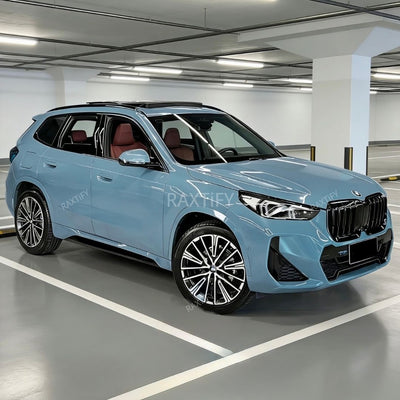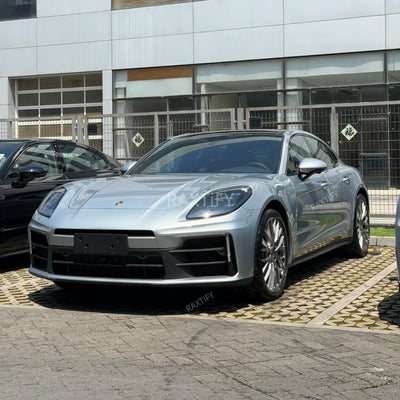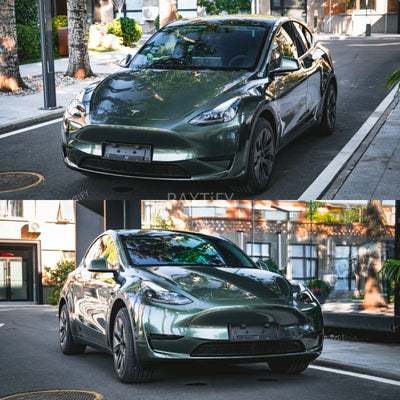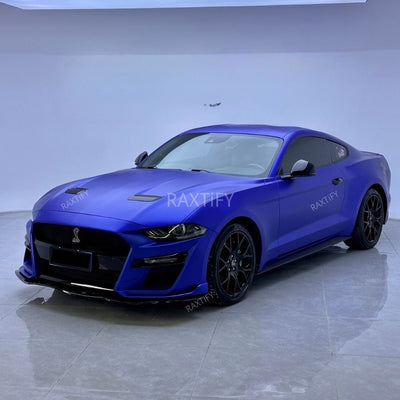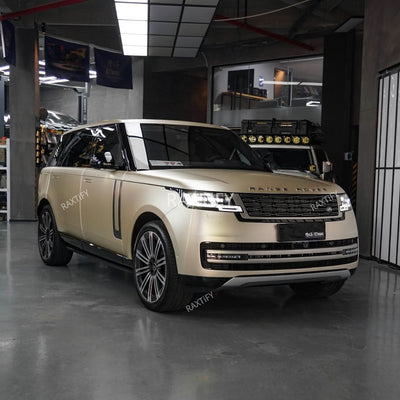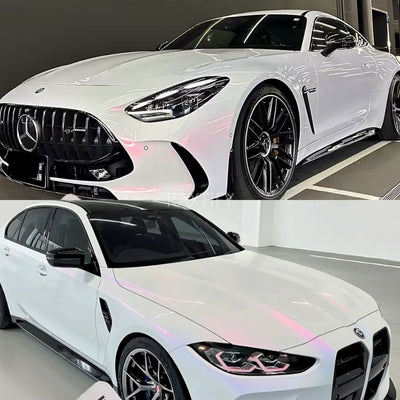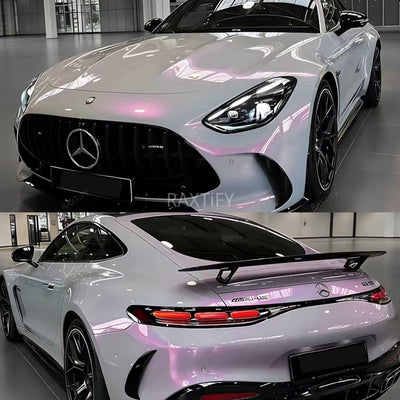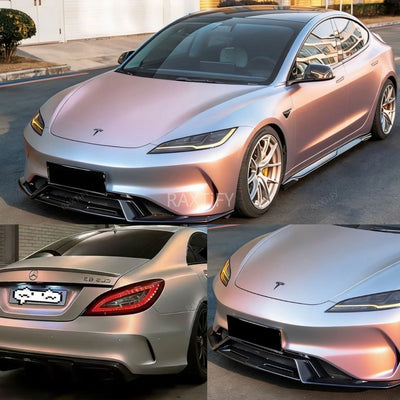

There is no inherent advantage to either dry-install or wet-install Color PPF. The dry application method is often more comfortable for vinyl wrap installers because the film is pulled up, placed and pushed into a dry panel. The wet application offers traditional PPF installers more time to slide and align the material with an installation solution. However, the choice of the installer is not the first priority; some films can be installed only dry and others can be installed only wet.
Dry vs Wet Color PPF—The 60-Second Decision
| Your Situation | Better Starting Choice | Why |
|---|---|---|
| The film is labeled dry-apply | Dry install | Its adhesive is designed to position and release air without slip solution. |
| The film is labeled wet-apply | Wet install | Its adhesive is designed to work with the manufacturer’s recommended solution. |
| Your installer mainly works with vinyl | Usually dry | Lift-and-place positioning will feel more familiar. |
| Your installer mainly installs traditional PPF | Usually wet | Sliding, floating, and solution control match the existing workflow. |
| Full-vehicle shop efficiency matters | Usually dry | There is less installation liquid to prepare, remove, and clean. |
| You need more time for precise alignment | Usually wet | The film can usually move across the panel before being locked down. |
| The required method is unclear | Neither yet | Confirm the correct application system before installing. |
| This is your first full-body Color PPF project | Professional installation | Neither system makes complex TPU installation beginner-friendly. |
This table is a starting point. The film manufacturer’s instructions should always take priority.
How Dry and Wet Color PPF Installation Work
How Dry-Install Color PPF Works
Dry-install Color PPF is put on without the need for the adhesive and vehicle panel to be coated with the slip solution. The majority of dry-apply products utilize an air channel or an air release adhesive that lets trapped air flow toward an edge when pressure is applied to the product.

Typically, the material is laid on the panel, verified for alignment, lifted up on sections of the panel as needed, and slowly squeezed into place with a controlled squeegee.
The process is similar to vinyl wrapping, but the material does not have the same characteristics as PVC vinyl. The TPU Colour PPF is typically thicker and with higher recovery properties, and may respond to heat, stretch, and multiple repositioning.
How Wet-Install Color PPF Works
Wet-install Color PPF is installed using an approved slip solution between the adhesive and vehicle surface. This allows the installer to slide or “float” the film to ensure that the color, edges and body lines are aligned.

When in place, the installer applies overlapping squeegee strokes to squeeze the fluid and air outwards. In certain areas with a high demand for good initial adhesion a tack solution or application gel may be applied.
Same Color, Same Finish, Different Installation System
What Does Not Change?
If a Color PPF product is available in both dry and wet form, the color and surface finish desired in each may be identical. A dry versus wet doesn't necessarily imply a lower level of protection – and a wet versus a dry doesn't necessarily imply a more professional level of product.
RAXTiFY products (e.g. Ultra Gloss Piano Black Paint Protection Film) include both dry-install and wet-install options, and they have the same price for the same size.
Please check the product page individually. The technical aspects of adhesive construction, the application requirements, protection claims and warranty terms can differ between product lines.
What Actually Changes?
The most important differences are under the film:
- How the adhesive develops tack
- Whether the film is lifted or slid during alignment
- How air or installation liquid is removed
- When the edges can be safely finished
- Which installation risks the technician must control
Problems with dry-install Color PPF include premature adhesion, multiple lifts, uneven pressure, glue lines and too much tension. For wet-install Color PPF, the installer needs to be careful about solution concentration, ensure that moisture is thoroughly removed and avoid the edges and corners being hindered by any remaining liquid.
The Adhesive System Still Sets the Rules
Dry-Apply Adhesive Usually Relies On
A dry-apply Color PPF may use:
- Air-release channels
- Controlled initial tack
- Lift-and-reposition capability
- Pressure-activated adhesion
These features aid the installer to install the film without overflooding a panel. These do not ensure easy installation nor remove all stains of adhesive.
Wet-Apply Adhesive Usually Relies On
Wet-apply Color PPF generally depends on:
- Slip solution for initial movement
- Controlled sliding and alignment
- Progressive liquid evacuation
- Tack solution or gel in selected areas
During the installation process the liquid temporarily slows down the adhesives reaction with the paint to allow easier positioning of the material.
Why Installers Should Not Change the Method Freely
Not all Color PPF's can be mounted either way. In fact, Avery Dennison's current data sheet on PrismaPro explicitly states that it should NOT be installed wet, whereas the instructions for Supreme and European Color PPF suggest it be installed wet.
However, putting a wet-apply film on a dry panel can result in over-tacking and alignment issues. The use of slip solution with an adhesive that requires “dry” application may make the application process counterproductive. An unapproved method can also cause problems to be difficult to determine if they are due to the product or the installation.
Dry vs Wet Color PPF—The Differences That Affect the Final Result

Installation Speed and Shop Workflow
Dry installation can be faster on large, straightforward panels because the shop does not need to mix, spray, remove, or clean up installation solution. Edges may also be finished sooner because there is no trapped liquid underneath them.
More solution management is needed if it is the wet type. Official wet-apply instructions may call for additional drying time after applying the wet or for rinsing off soap from the edges.
This does not imply that dry application always comes first. A very experienced wet PPF installer might be able to install a panel quicker than a novice.
Positioning and Alignment
Dry installation is a lift and place process. The installer locates an anchor point, verifies alignment, raises and lowers material as needed, and applies pressure incrementally. Over-pressing at a too early stage will limit the capability to re-position the film cleanly.
Wet installation is done with a slide and float technique. The solution prevents the glue from joining the panel right away, enabling the film to shift to ensure that the body lines, edges and direction of finishes are correct.
That extra movement can be useful on a hood, roof, long door, or panel with a clearly defined body line. Late repositioning may still cause marks to be seen, however, once there is significant pressure applied.
Adhesive Marks and Glue Lines
Dry-install Color PPF may exhibit adhesive and/or pressure marks if installed in extreme tension, continuously lifted, unevenly pressed or placed on a hot panel. Dark reflective finishes, like gloss black, can accentuate surface irregularities.
Proper pressure, temperature, and tension control is necessary and air-release technology will greatly assist the removal of trapped air. Installer discussions also reveal a lack of consensus that all dry PPF will work the same, especially in gloss finishes where work marks become more prominent. While these discussions are helpful observations, they shouldn't be regarded as universal product rules.
Trapped Solution and Moisture
The main wet-install risk is not simply “water under the film.” It is installation liquid that has not been properly evacuated from a critical area
Solutions need to be carefully considered at edges, corners, emblems, panel gaps and tight returns as this can decrease the initial adhesion. Although sometimes small hazy patches will change when moisture is removed from the installation, contaminated edges, large pockets, or improperly squeegeed areas should not be taken for granted.
There is no single waiting period that applies to every Color PPF. Follow the product instructions and the installer’s documented aftercare process. Adhere to the product guidelines and the installer's post-installation procedure.
Gloss, Metallic and Satin - Surface Clarity
The finished look is not guaranteed with the installation method.
When the pressure and tension are controlled, dry-applied gloss film can look clean; however, when handled aggressively, it will reveal squeegee paths or disturbance of the adhesive. Although smooth positioning is provided with wet applied film, the film can also be inconsistent if the solution gets trapped or if the film lifts late.
There are other issues to consider: metallic, pearl, and color-shift finishes, in which the light reflectance properties of the particles may be affected by panel orientation and stretching. To minimize visible color differences in the application.
Satin and matte surfaces can have less shine, but can also rub or change in pressure or uneven shine. It's possible that a well-installed dry film can appear cleaner than a poorly installed wet film, and vice versa.
Edges, Corners, and Recesses
The advantage of dry installation is that it can make edge finishing easier if the installer doesn't have to wait for the solution to set. The problem is, though, that if the edge is set too tight, it could come back after the vehicle has left the shop.
Wet installation allows the film to be more flexible during the initial installation however, it is the responsibility of the installer to make sure that no soap or gel is trapped under the edge of the film. Official instructions may dictate that the edge area is to be rinsed and re-squeegeed prior to trimming.
Both approaches do not obviate the need for relief planning. It is not good practice to stretch a deep recess and make it fit.
Stretch &Tension Control.
The TPU PPF is more likely to recover than regular PVC wrap. If exaggerated, it may cause ongoing pressure on edges, corners and recessed areas.
Stretching too much can also affect the depth of color, the direction of the metal, the level of gloss or the topcoat.
A wet film moves with the help of water, a dry film releases air with the help of air channels. Water helps a wet film move, while air channels help a dry film release trapped air. Neither feature removes tension from the material.
Which Method Fits Your Installer’s Background?
For Vinyl Wrap Installers
Vinyl installers will more easily get comfortable with dry-install Color PPF, while TPU will need a more controlled approach. Being more resistant to recovery and more sensitive to the topcoat, less room for too much heat, stretch, or pressure from the squeegee. While experience with wraps is helpful, a sample panel needs to be tested prior to beginning a vehicle wrap.
For Traditional PPF Installers
In general, traditional PPF installers will get more consistent results with the wet-install film since it's the process that they already perform daily. Care must be taken in switching to dry application, particularly when using a new adhesive for large gloss panels or complicated curves. Generally speaking, the system that has been tested by the installer is the better option – not the one they are willing to try for the first time.
For New or DIY Installers
Neither method makes full-body Color PPF beginner-friendly. Large open panels may appear manageable, but bumpers, mirrors, sharp corners, and deep recesses require experience with tension and material recovery. For a complete vehicle, proven installation skill matters more than whether the film is dry-apply or wet-apply. While large open panels might be easy to handle, bumpers, mirrors, sharp corners, and deep recesses will need experience with tension and material recovery. If you're installing a complete vehicle, the skill of the person is more important than dry-apply versus wet-apply film
Which Method Works Better on Different Vehicle Panels?
| Vehicle Area | Dry-Install Advantage | Wet-Install Advantage | Main Risk |
|---|---|---|---|
| Hood | Efficient placement and air removal | More sliding time for centering | Visible pressure or squeegee lines |
| Door | Fast workflow on open surfaces | Easier alignment with body lines | Uneven pressure on dark gloss film |
| Roof | Less solution cleanup | Longer positioning window | Tension or trapped moisture |
| Fender | Direct lift-and-place control | Easier initial floating | Stress around compound curves |
| Bumper | Efficient for a skilled dry installer | More freedom during initial alignment | Overstretching and edge failure |
| Mirror | No liquid trapped around tight returns | Easier first placement | Excess heat and concentrated tension |
| Deep recess | Air channels help manage air | Solution helps initial movement | Neither method replaces relief planning |
Switching between dry and wet by panel is only appropriate when the exact product is approved for both methods.
Questions to Ask Your Installer Before Choosing Dry or Wet Color PPF
1. Which installation method does your shop use most often?
A shop’s real experience matters more than a general claim that one system is always superior.
2. Have you installed this color or finish before?
Gloss black, metallic, color-shift, satin, and matte surfaces reveal different types of installation inconsistency.
3. How do you prevent glue lines or trapped solution?
A capable installer should be able to explain pressure, temperature, tension, solution evacuation, and inspection—not simply promise that marks never happen.
4. How do you handle bumpers, mirrors, and deep recesses?
These areas reveal whether the shop understands tension relief and complex TPU installation.
5. When will the vehicle be ready for normal use and washing?
The answer should follow the specific manufacturer’s aftercare guidance rather than a universal waiting period.
Does Dry or Wet Installation Affect Durability?
Dry installs are not necessarily more durable than wet installs, and vice versa. Long-term performance is more dependent on the installation of the film using its adhesive system, with the correct surface preparation, tension control, edge finishing and inspection after installation.
Both a properly installed dry film and a properly installed wet film can be stable. The most common issue occurs when the application technique is incorrect, the material is overstretched or when there is contamination under the adhesive.
Also, be sure to take a look at the warranty terms prior to installation. RAXTiFY's warranty does not cover installation problems, including bubbles, wrinkles, lifting and overheating, overstretching, and improper trimming. However, in practical use, it is not as important as installation quality whether the film is applied dry or wet.
Dry or Wet Color PPF—Which Should You Choose?
Choose Dry-Install Color PPF If
Dry is a sensible starting point when the product is specifically designed for it, your installer has strong vinyl wrap experience, full-vehicle workflow efficiency matters, and the shop understands air-release adhesives and TPU tension.
Choose Wet-Install Color PPF If
If the product needs to be wet, the installer has a proven track record of using traditional PPF, longer sliding time is important, and the shop has a proven method of solution control, liquid removal, and edge inspection, then wet is a good starting point.
Final Verdict
In the world of dry install vs wet install Color PPF, there is no one-size-fits-all answer. First the adhesive system, then the background of the installer, the complexity of the panels on the vehicle and the workflow of the shop. If the color, finish, size and price are identical, it may become a risk management issue and not one of selecting different color and look or level of protection. It's more critical to match the right product with the right installer than it is to choose the latest or fastest method.
Frequently Asked Questions
Q1. Is dry-install Color PPF easier than wet-install Color PPF?
It is simpler for vinyl wrap installers due to the positioning procedure being well known. Wet application may be more straightforward using traditional PPF installers as the film can be slipped while aligning.
Q2. Does dry-install Color PPF leave glue lines?
It can happen, but not every dry installation leaves glue lines. Repeated lifting, high tension, uneven pressure and/or panel temperature can all cause visible marks.
Q3. Can wet-install Color PPF be installed dry?
Only if approved by the manufacturer of both. Excessive initial tack can occur on a dry panel with a wet-only adhesive.
Q4. Can dry-install Color PPF be installed with slip solution?
Do not suppose that it can. Not all dry-only adhesives can be used with installation liquid
Q5. Which method is faster for a full vehicle?
Dry installation can be quicker on open panels as there is less liquid preparation and clean up. The result may vary depending on the experience of the installer and the complexity of the vehicle.
Q6. Which method is better for bumpers?
Depending on the type of installation, there can be more initiation of movement with wet installation, or work efficiency can be achieved with dry installation for an installer who is experienced with dry TPU. The technique is not the most important thing, it's also the relief and tension control.
Q7. Can the installation method affect the warranty?
If there is a problem caused by the use of a method that is not in line with the product instructions, this problem may be interpreted as installation, not material, and it could be passed on to the customer.