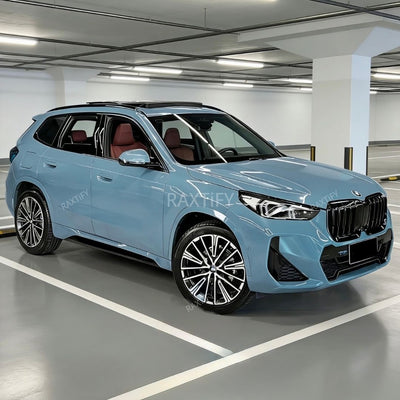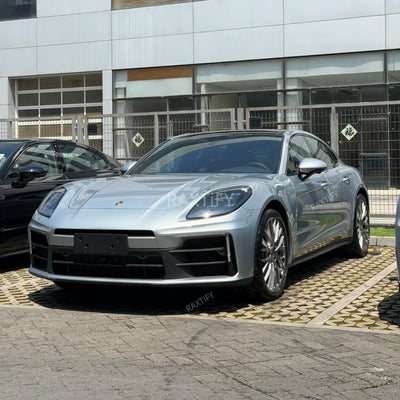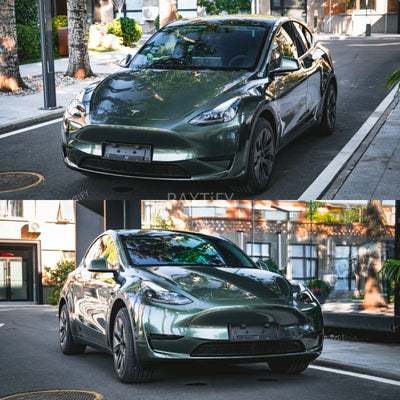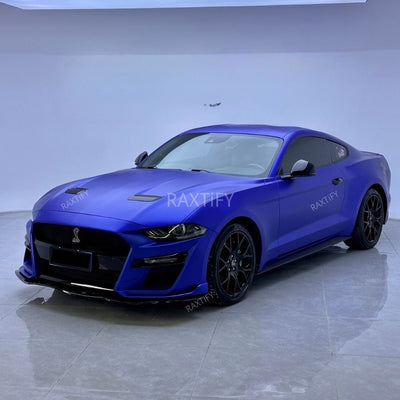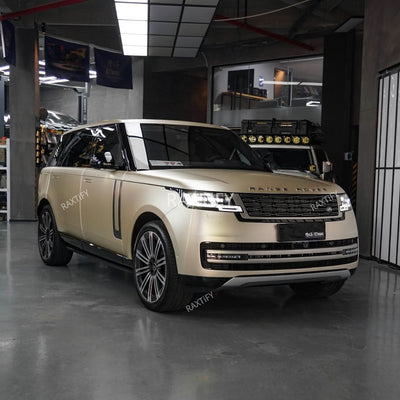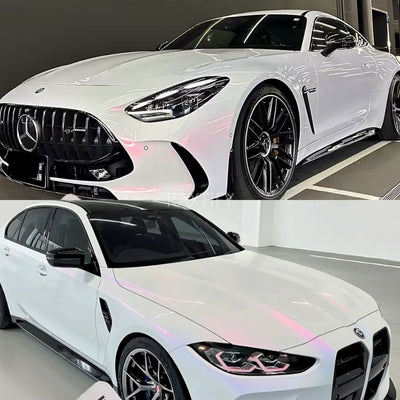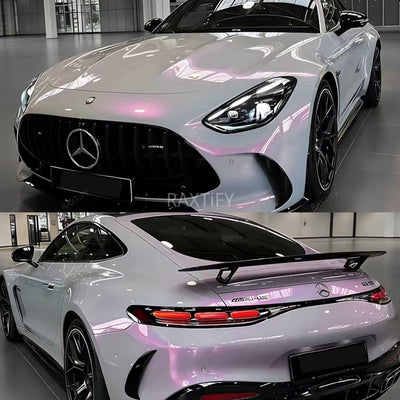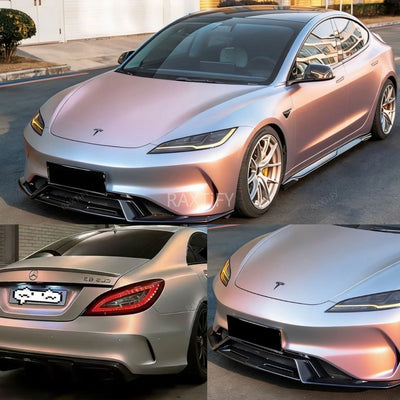

Most vehicles begin at 45 linear feet to 75+ linear feet of the 5-foot wide film needed for a complete exterior Color PPF wrap. Depending on the size, a small coupe could be as close as 45-50 feet, a larger SUV or pickup 70-75 feet or more.

The amounts listed below are a starting point and not guaranteed.
| Vehicle Type | Typical Planning Range | What Can Increase Material Use |
|---|---|---|
| Small coupe / compact car | 45–50 ft | Wide bumpers, spoiler, difficult rear quarters |
| Medium sedan | 50–60 ft | Large hood, roof coverage, complex bumpers |
| Large sedan / wagon | 55–65 ft | Longer roof, hatch, large quarter panels |
| Compact SUV / crossover | 60–70 ft | Taller doors, tailgate, larger bumpers |
| Medium / large SUV | 70–75+ ft | Tall body panels, wide rear quarters, roof and accessories |
| Pickup truck | 75+ ft | Cab size, bed length, bed sides, tailgate and bumpers |
Please note that RAXTiFY's standard 49ft full roll is not to be confused with a guaranteed full-car quantity. Some smaller vehicles may be within that range, many sedans, SUVs and other more complicated installations will need more length.
How Much Color PPF Do You Need for Individual Panels?
It is more useful to measure the actual panel than the length of the car if you're wrapping just an area.
They are the typical ranges used to begin material planning:
| Area | Typical Starting Cut From a 5-ft-Wide Roll |
|---|---|
| Full hood | 5–7 ft |
| Roof | 5–7 ft |
| Front bumper | 6–8 ft |
| Rear bumper | 6–8 ft |
| Trunk lid / hatch | 4–6 ft |
| One door | 4–5 ft |
| Both front fenders | About 5–7 ft total |
| Mirror caps | Often cut from usable offcuts; about 1–2 ft if purchased separately |
The numbers shouldn't just be summed up to obtain a complete order for a full car. The shapes of a bumper, mirror, fender and rocker panel are very different and several smaller parts are sometimes placed in the unused sections of another cut.
For instance a front bumper could need a 7-foot length, but not the whole 5-foot width. If you have some of the left over material, you might be able to install another smaller panel by an experienced installer. The bumper on another car might have a jagged or too narrow an offcut to be recycled.
Why Two Cars of Similar Size May Need Different Amounts of Color PPF
The overall length of two different cars may be the same but require different amounts of Color PPF. The length of the vehicle is a starting point but does not demonstrate how the film will be applied to each of the body panels.
A car with less door-jamb coverage, narrower quarter panels, simpler bumpers might be more efficient in using material than one with a large hood, deep bumper, wide quarters, doors, side skirts, spoilers and so on. Taller doors, larger tailgates and larger body panels also can mean a greater amount of material in SUVs.
The cutting of film is also important. Not all leftover pieces can be used on another panel and RAXTiFY Color PPF is 5 ft wide. For instance, a bumper might result in leaving behind a couple of square feet of film, which may still be too narrow or the wrong shape for a door or rear quarter panel.
Total square footage and usable material are not the same thing
That is why the formulas, like vehicle length × 3, should be used as an approximation only. The material requirement is influenced by the size of the panel, the shape of the body, the area to be covered and how the panels fit within the 5-ft-wide roll.
What Does a “Full Roll” of Color PPF Actually Mean?
There is no universal size “full roll” of Color PPF. Some brands will market a 50-foot roll, another may be 60-foot roll or a 65-foot roll. It's not quite as simple as asking if 1 full roll is sufficient for a car?
Our Color PPF in RAXTiFY comes in a 5-foot width, and 49ft is the standard full-roll length. Longer lengths are also available.
The difference is important when making material comparisons. When it comes to a sedan, if the guide says “one roll”, take a look at the length of the roll first. 49ft roll and 60ft roll can both be called full rolls but are not equal in value of material obtained.
Does Bulk PPF Use More Material Than Pre-Cut PPF?
The amount of material required to make bulk PPF can be more than the pre-cut kit but the difference isn't always set. This will vary based upon how the panels are planned, the amount of edge coverage needed, and how well the installer utilizes the roll.

How Pre-Cut PPF Affects Material Use
Pre-cut film is cut from a digital vehicle pattern before being installed on the vehicle. This can eliminate unnecessary material around some panels, but patterns aren't created in the same manner. Some stop near the edge of the panel, some have extra material that is wrapped around the edge.
While a tight pattern can help conserve film, it can also lead to a different level of coverage than what is achieved with a bulk pattern installation where more film is meant to be wrapped around the panel edges.
Why Bulk PPF May Require Larger Pieces
If the installation is bulk the installer cuts each section directly from the roll. Usually sufficient material will be left to position, stretch, edging and wrapping edges.
Large, curved sections, wide quarter panels and complex bumpers may need more than they appear to, for example.
Bulk installation does not necessarily result in more waste. An experienced installer can plan a series of panels along a length of 5 feet, and use appropriate off-cut lengths for smaller panels without needlessly cutting out oversized lengths.
The amount of linear feet of Color PPF used depends on the Pattern Design, Edge Coverage, Panel Layout and Installer Technique.
How Much Color PPF Should DIY Installers and Professionals Allow?
The quantity of Color PPF you need to order also depends on the person installing the PPF. It is not advisable to plan the same material quantity for a first-time DIY installer and an experienced professional.
First-Time DIY Installers
In a DIY full car project, we'd prefer to allow a bit of rework rather than make the minimum amount of calculation to cover each panel. Positioning issues, contamination, cutting errors, and excessive stretch are more common in bumpers, mirrors, tight corners and other difficult areas. If the film on one of those panels has to be removed and restarted, it might be necessary to use another complete piece of film.
A simple sedan with relatively flat panels is different from an SUV with large bumpers, spoilers, and more complicated body lines. The extra material should reflect the vehicle and the difficulty of the panels being wrapped.
Professional Installers
Professional installers are able to work closer to the intended material quantity. They know more about panel size, how panels can be laid out on a five-foot wide roll and where additional handling material is required. With more successful nesting and fewer failed panels, there is less waste of offcuts.
Even when hiring a professional installer, ordering the absolute minimum is not always the end goal. Running short can cause a delay in the job and can necessitate the purchase of additional Color PPF from a different production lot.
Balance Rework Margin With Material Waste
The cost of colour PPF is high, so if it is ordered in excess of the project requirement, then this is a waste of material costs. Simultaneously, purchasing the bare minimum will allow for little margin of error in the installation or panel rework. The more sensible approach is to order enough material to allow for realistic rework, rather than using additional film as a blanket policy.
What Happens If You Run Short of Color PPF?
Additional Color PPF can be ordered later, but a later order may be from a different production batch, resulting in minor variations in color, metallic or overall tone.
Therefore, we generally would not recommend a complete car fit with the absolute minimum amount of film. Some usable material will be beneficial for installation error and for future replacement of the panels.
Should You Keep Leftover Color PPF?
It can be worth keeping if the remaining piece is large enough to be used for a later replacement of a mirror, fender, rocker panel or another area of damage. This film may also offer a more accurate representation than film bought from another production batch due to the material from the original roll.
However, even material from the same original roll may look slightly different after the installed film has been exposed to sunlight, washing and weather conditions for a few months or years.
Store leftover film with the liner in place and ensure that it is kept clean and out of direct sunlight and heat. Very small, irregular pieces are generally less useful for future panel repairs.
FAQ
Q1. Is one 49ft roll enough to wrap a car?
A: A 49ft roll may be enough for some small coupes and compact vehicles, but it should not be treated as a universal full-car amount. Medium sedans, SUVs, complex body shapes, or installations that need extra rework allowance may require additional material.
Q2. How much extra Color PPF should a beginner buy?
A: There is no hard and fast formula for calculating percentages for all DIY projects. The beginner should leave some of the material for the panels that are most likely to require a second try, such as bumpers, mirrors and curves.
Q3. Can I order more Color PPF later if I run out?
A: Yes, but a later order can be from a different production lot. Color PPF of different lots may have appearance differences, and this can become important if the product runs out near the end of the color-change installation.
Q4. Is square footage enough to calculate Color PPF quantity?
A: Square footage only represents nominal material area. PPF is rolled out in a fixed width and vehicle panels are irregular. The amount of film that is unusable after cutting, and how the panels lay along the roll will determine actual material usage.